Story Intro Storyboard Gallery Books About Donate
(no javascript)
❮   Back
Description
Story info

This story board tells how the Temiars produce rice.

Swipe the slides to left to view next.

This is the non-javascript version. Click on the back button to access the full version.

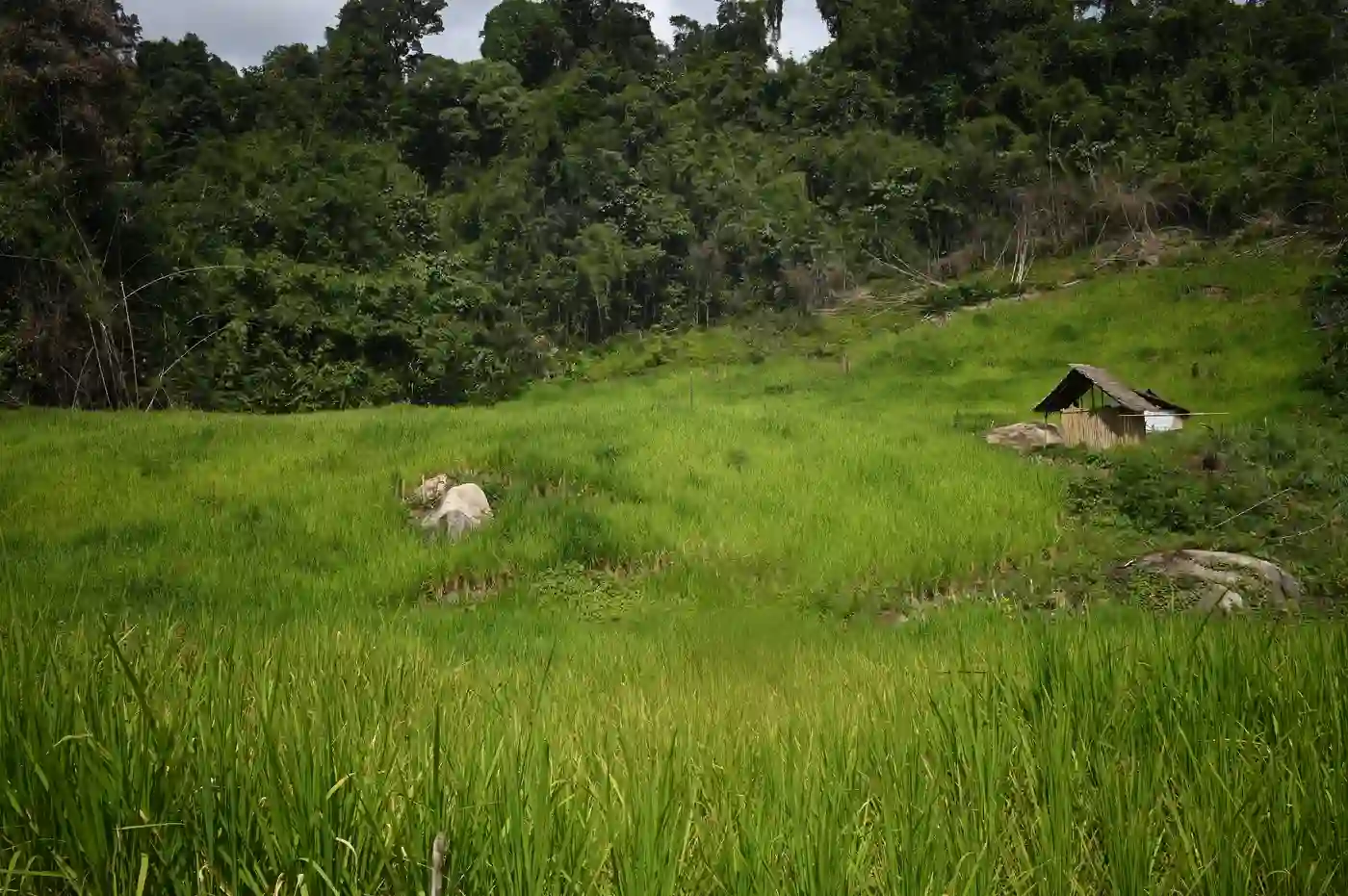
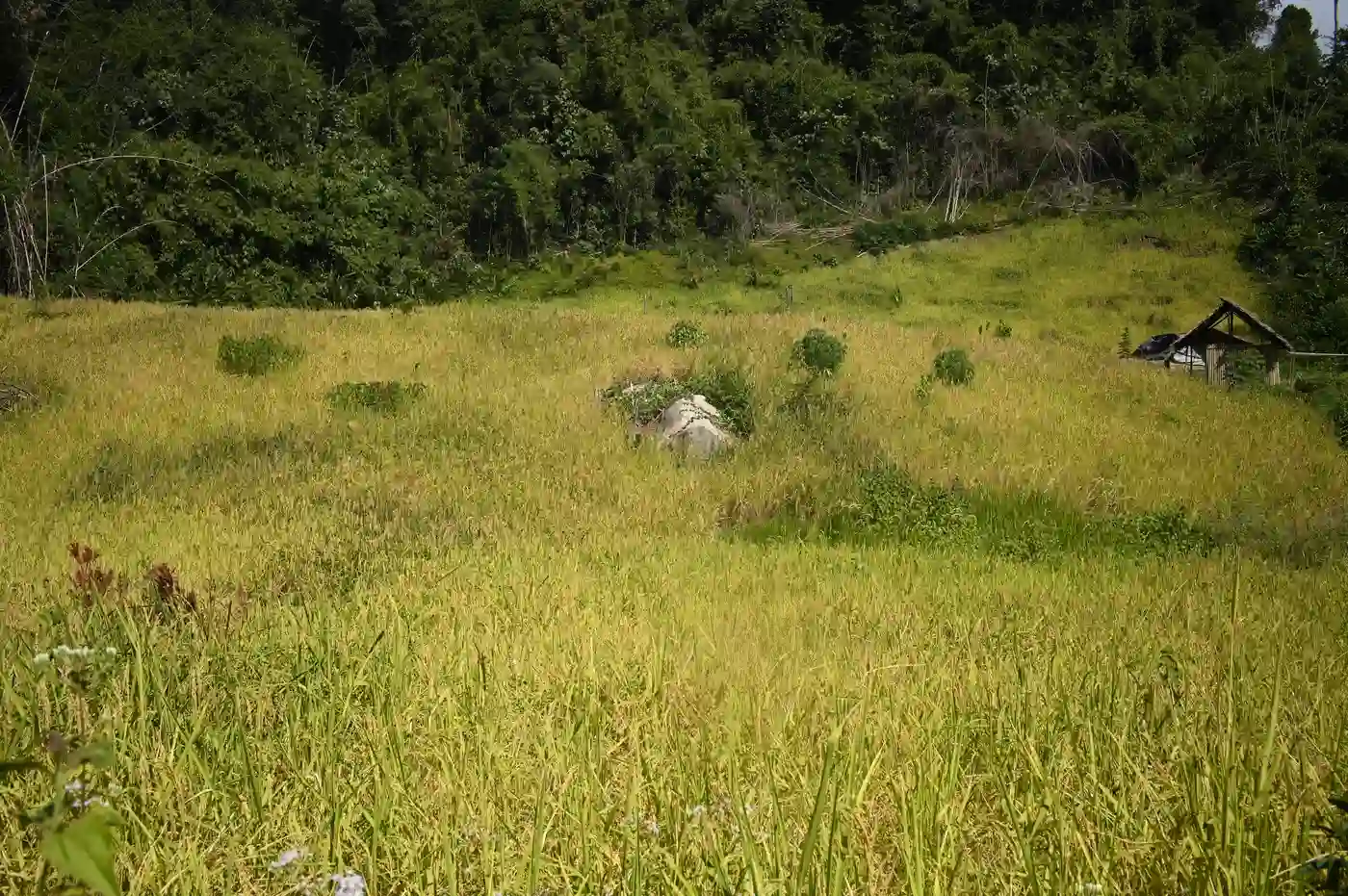
Home-grown rice is the life source of the Temiars and a good crop like this (late 2025) is essential to their food security, since they generally don’t make any money and can’t easily import food. Ensuring such a crop and harvesting it is highly labour intensive and demands a massive amount of energy to be expended, and still the crop can fail. That energy coming from small-bodied but very determined people.
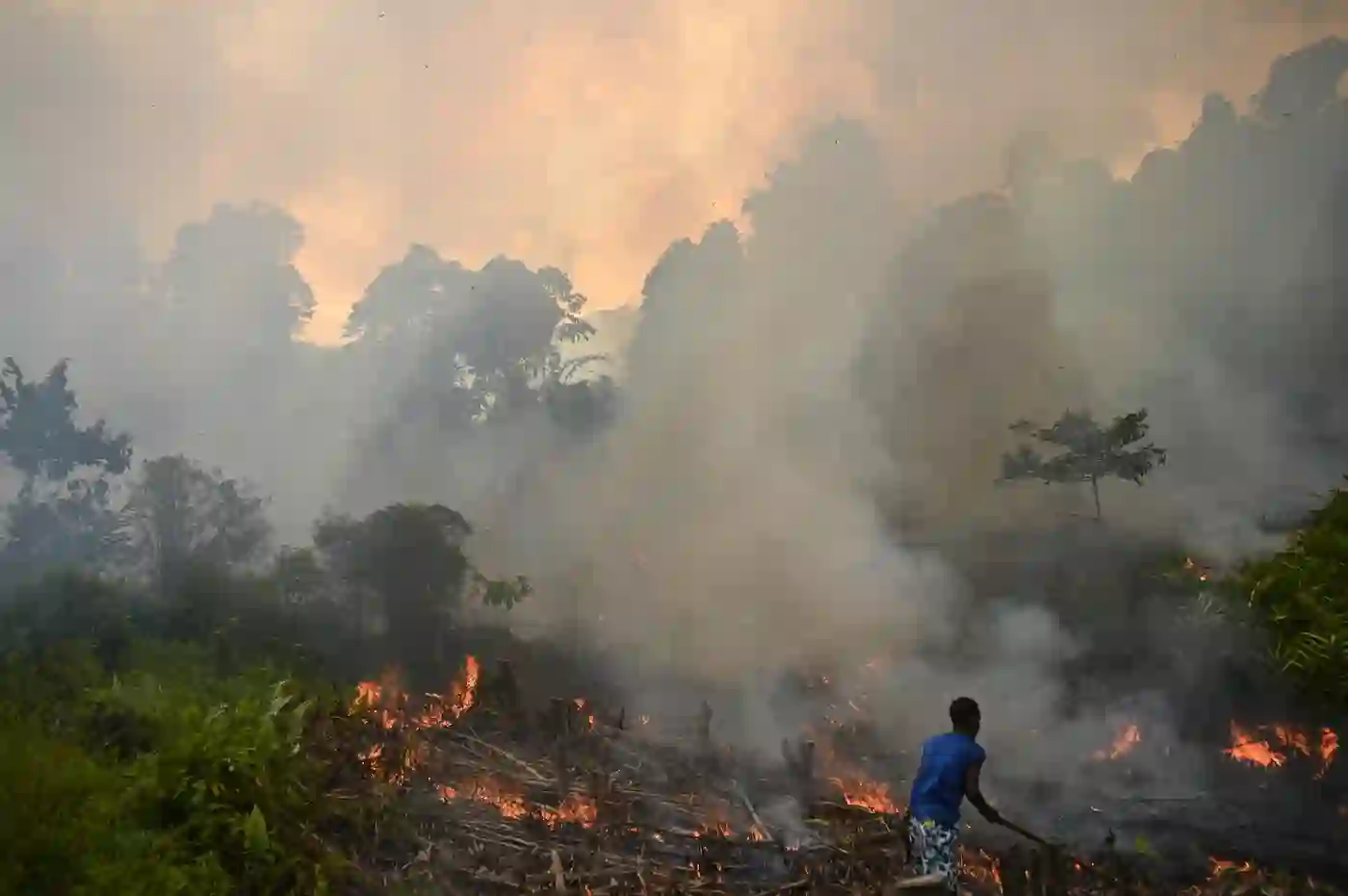
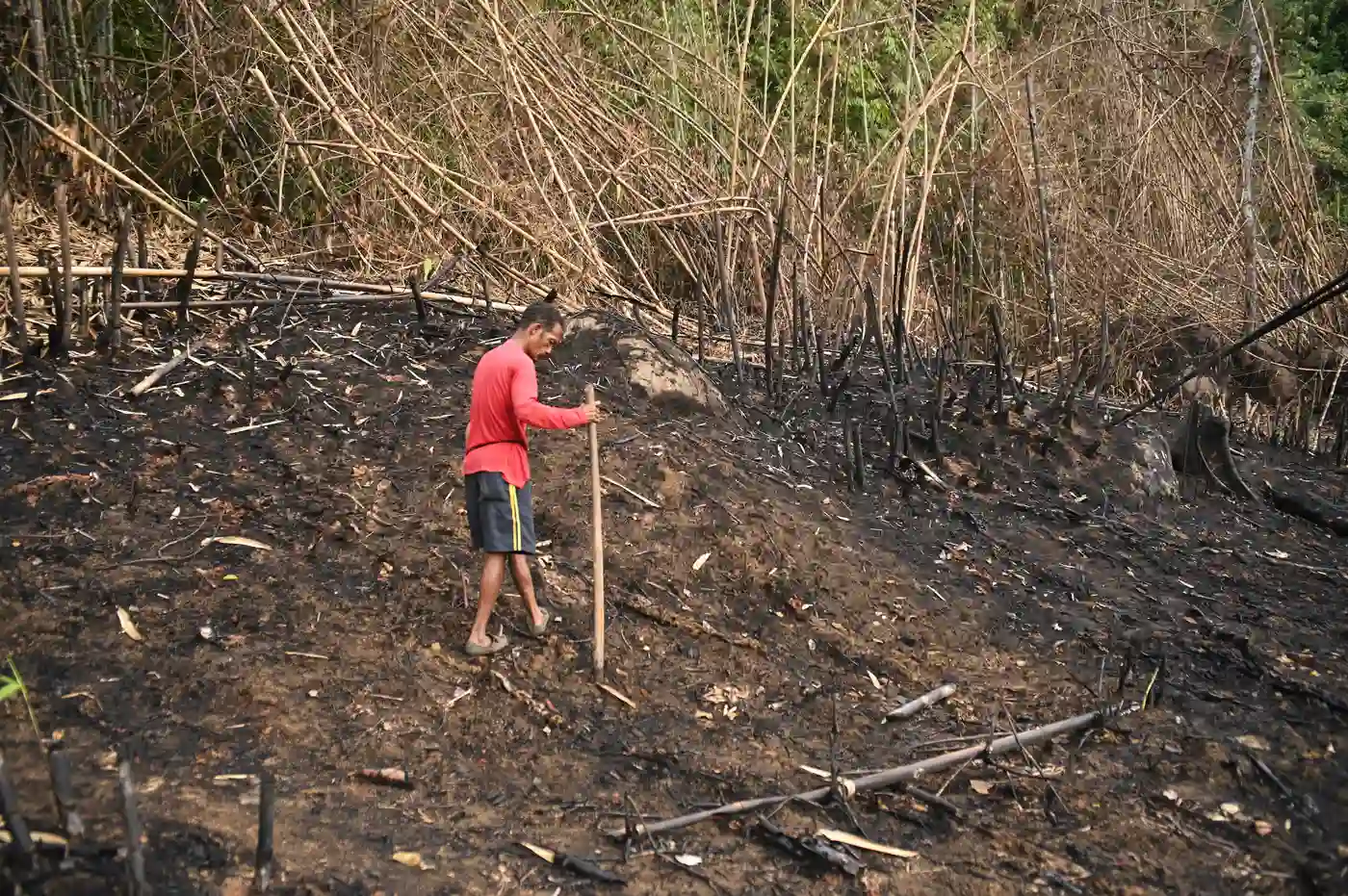
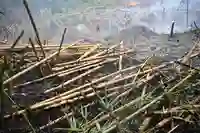
The first stage of the swidden involves cutting down bamboo and small trees on previously cultivated land, which takes a month of high-risk work and the swiddeners need food to supply the energy. A vigorous burn-off is vital and only possible if the cut down vegetation has fully dried out (takes 6-8 weeks). The fire is lit in the hottest part of the day and the inferno rages, tearing through the bamboo like dry grass, to the top of the field.
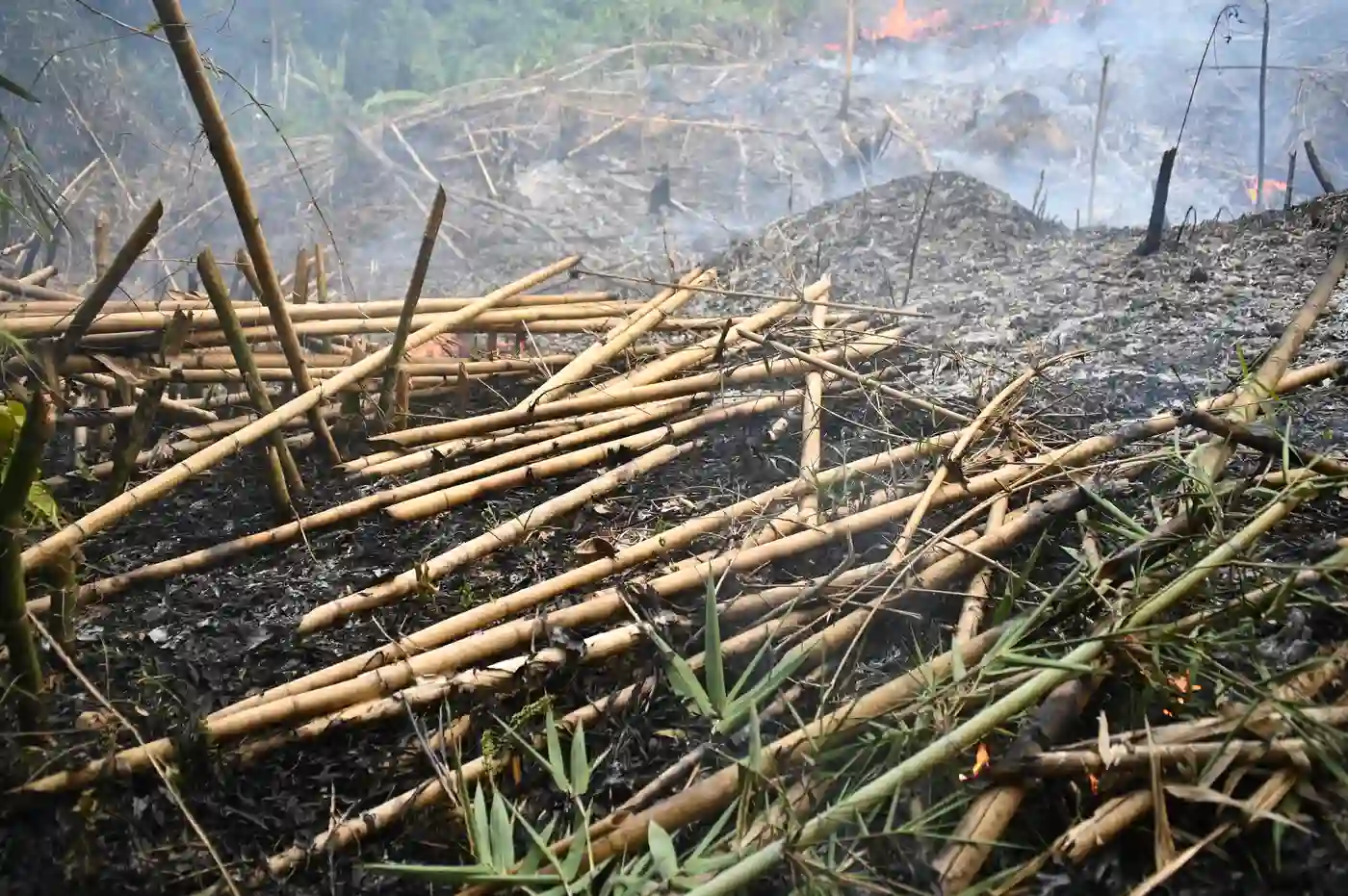
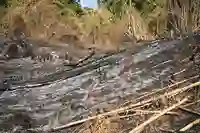
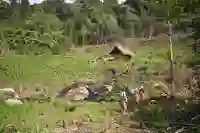
If the burn-off leaves too much bamboo behind, because it hadn’t fully dried out, it would take too much unnecessary labour to collect it into piles and for burning. Luckily the bamboo in this picture is on the edges of the swidden and can be left alone. Unexpected rains can cause a swidden failure as the cuttings can’t be burned.
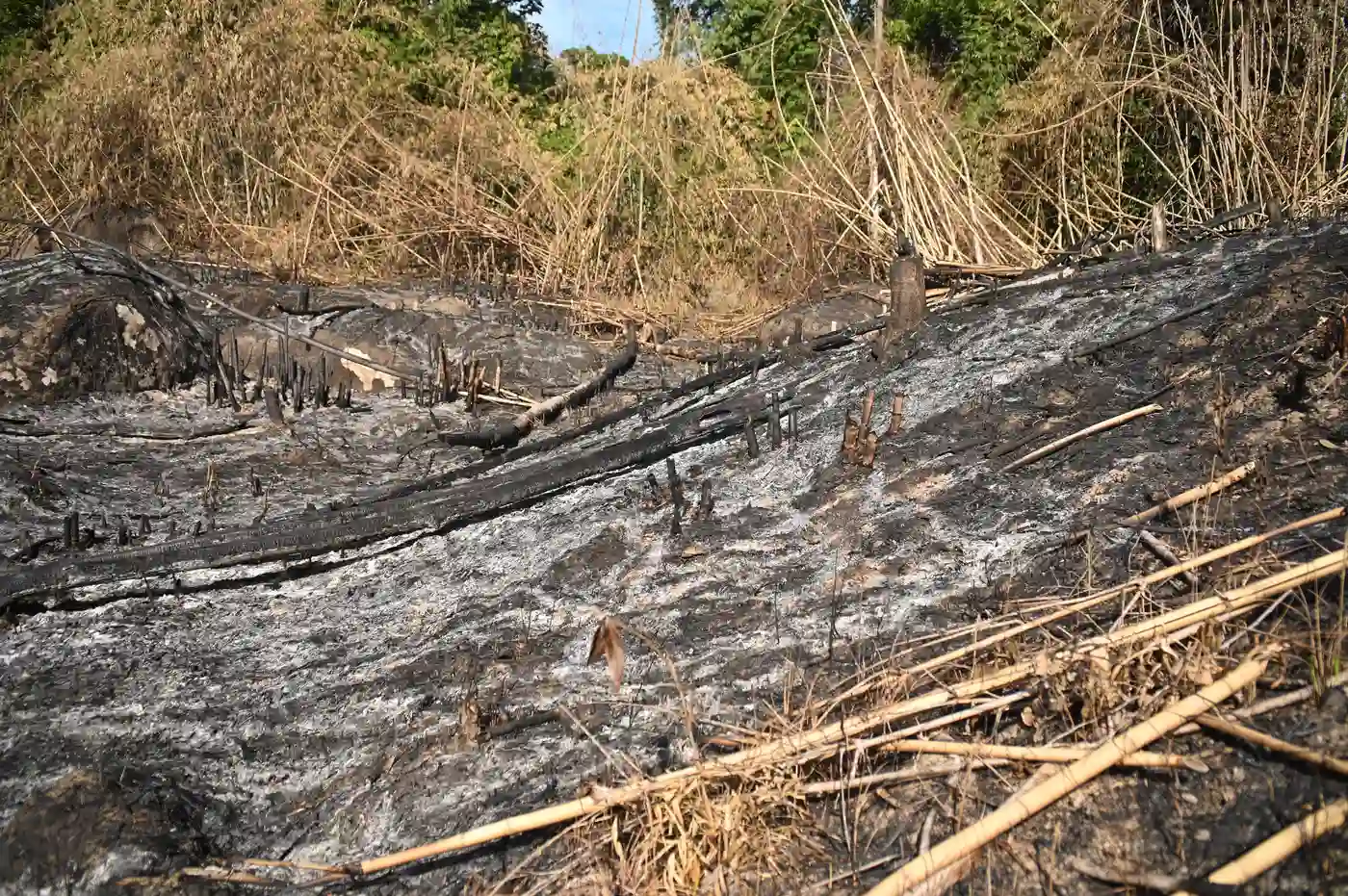
A successful burn-off leaves clear land to plant on, the soil is softened and the ash also helps the crops to grow. As soon as the rain falls on the blackened earth the swiddeners can prepare to plant seed. With the rains usually coming in early September, this is the time to aim for, burning the swidden just before they come.
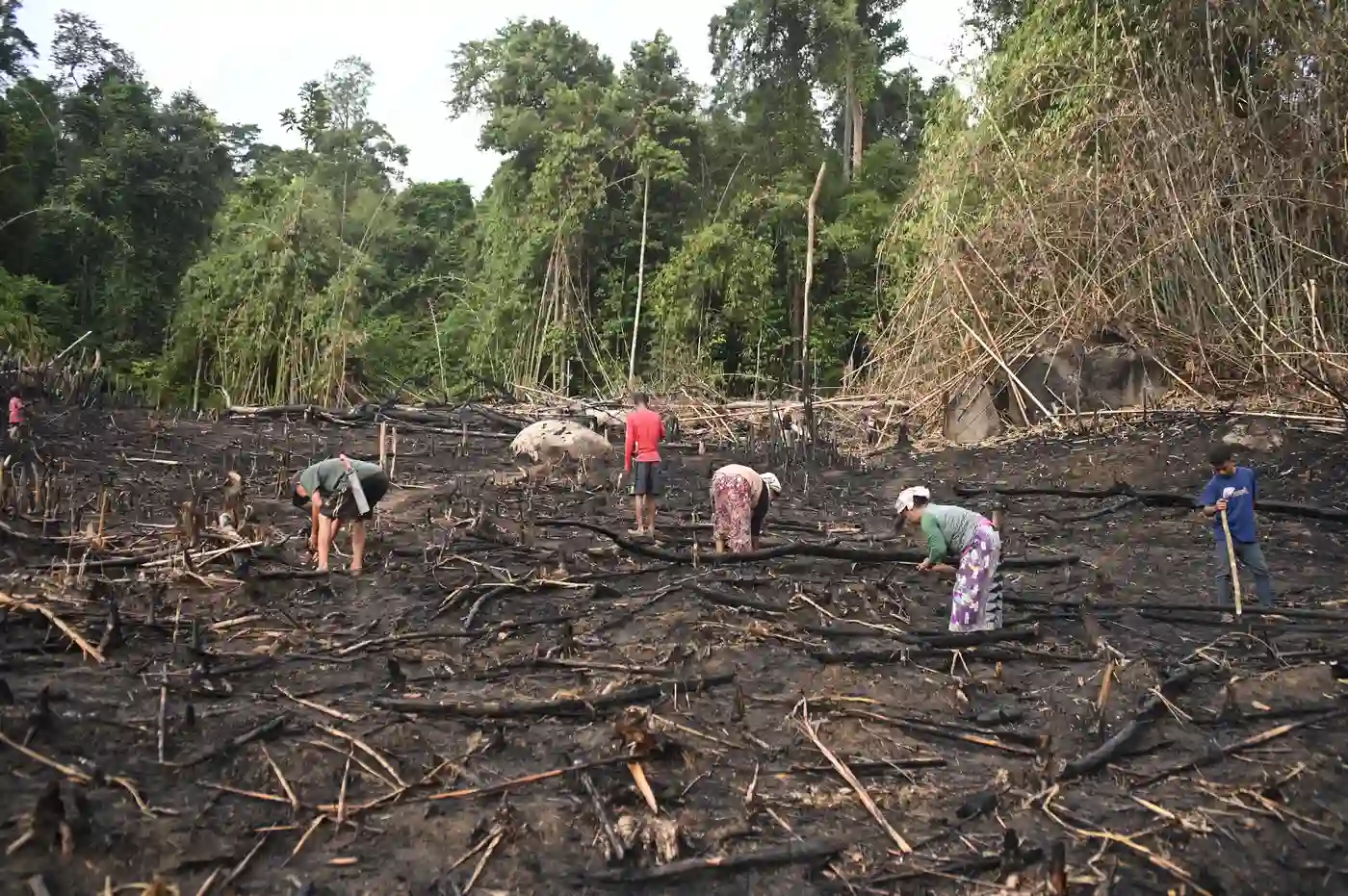
The first day of planting is called ‘dropping the seed’ and the swidden owner symbolically plants just a bowl of seed, while petitioning the guardian souls of the swidden for a good crop. A feast is held after the ‘dropping’ for the whole village and the real planting begins the next day.
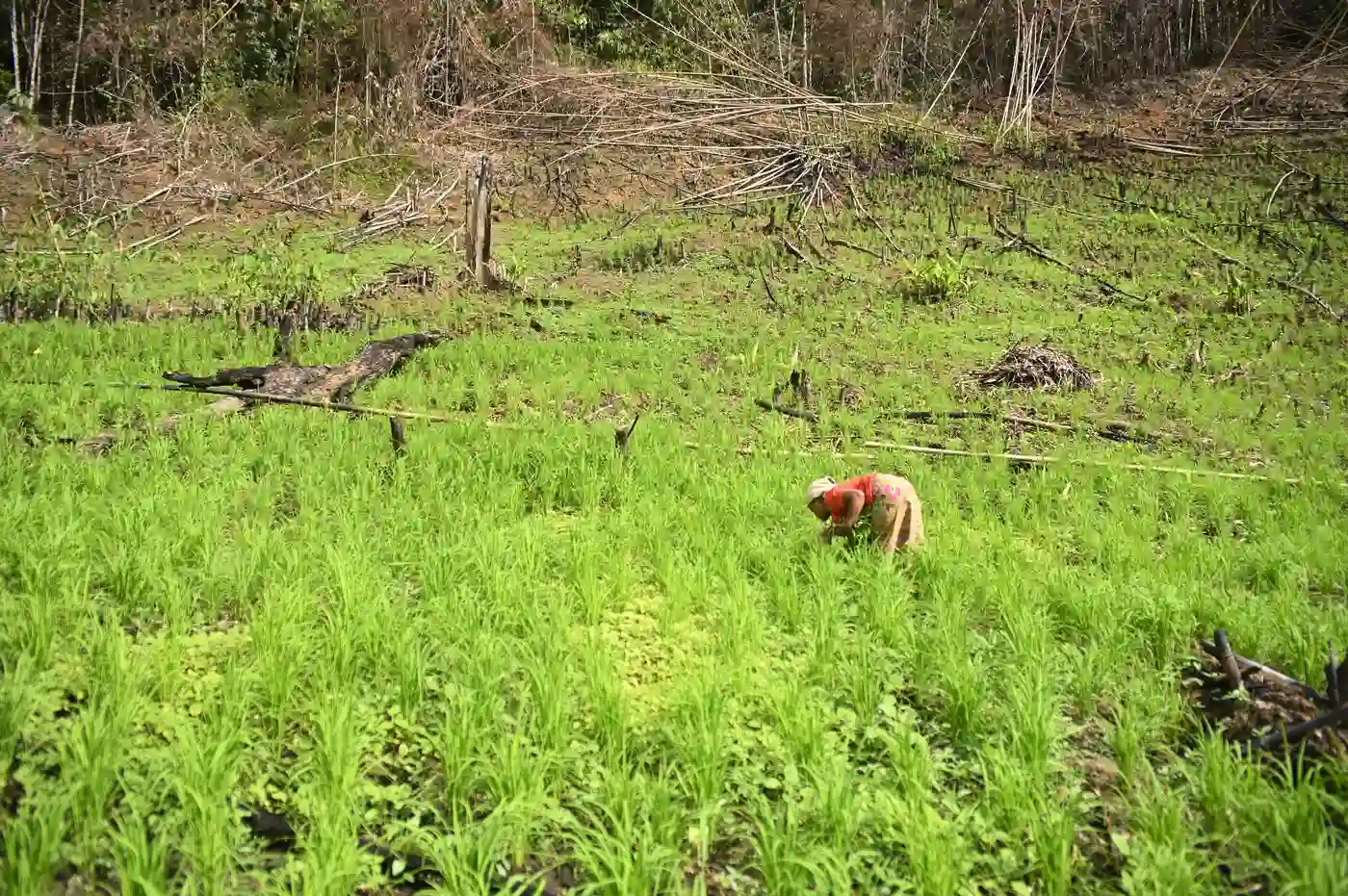
Each household of Temiars cuts, burns and plants their own swidden, but sometimes the extended family share a large one. The planting is made by prodding holes with a dibble stick and dropping about 10 grains in each hole. If the holes are too close together or too many seeds are dropped in them the crop might produce heads with sparse or empty grains. The work of dropping is almost back-breaking with hours of bending over.
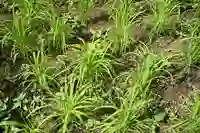
Thousands of holes are prodded all over the ground and the next rain causes the seeds to sprout in a matter of a few days. From that time onward the crop needs to be protected from pests, and even at this early stage, from elephants that might tread on the sprouting crop. The elephants have an acute sense of smell and are attracted by the fresh leaves, which they consider edible.
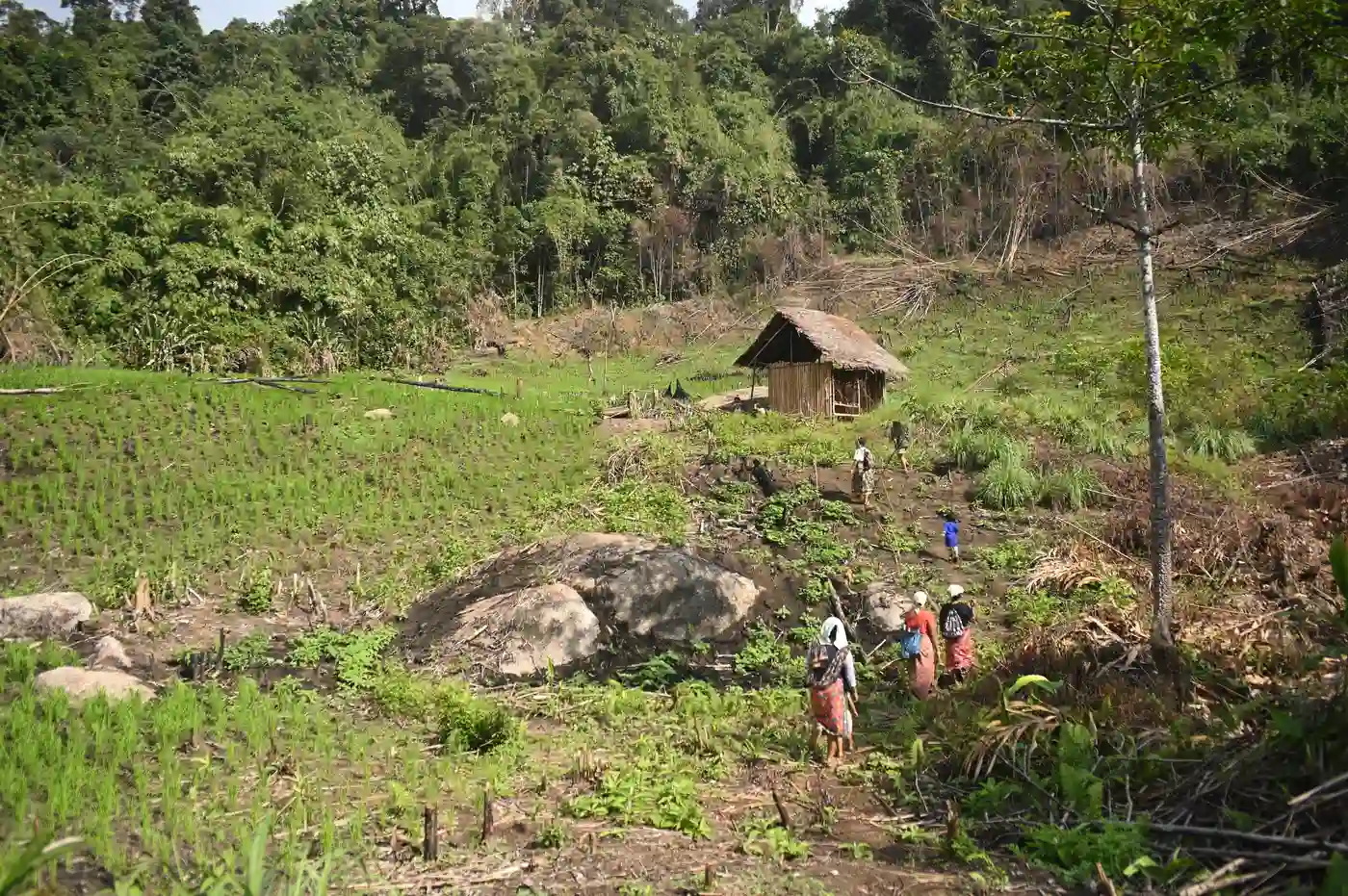
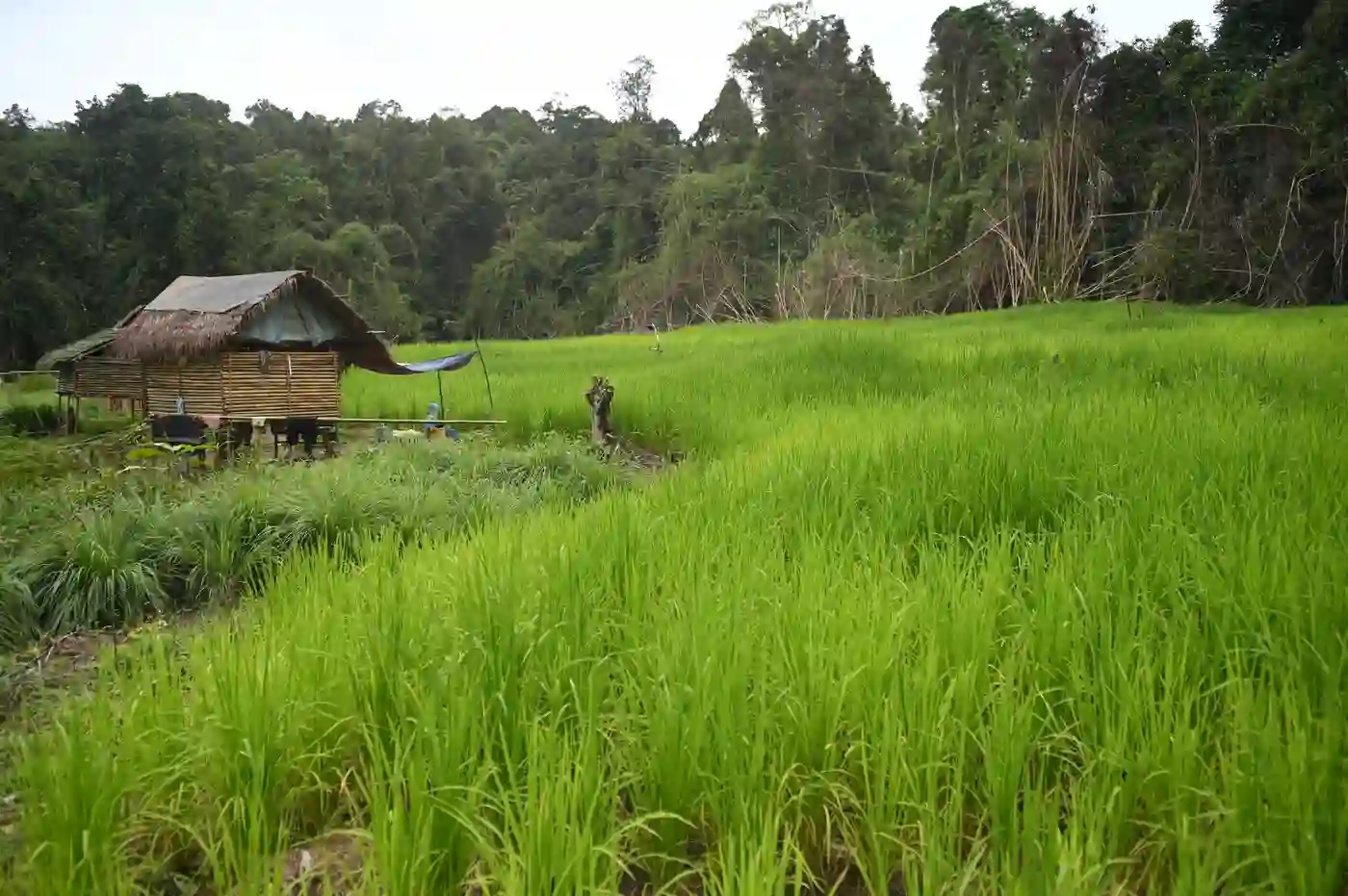
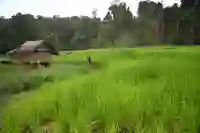
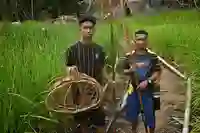
A swidden hut is built at this time, so that the swiddener can stay there at night to light a fire and chase off pests (beating on steel drums when elephants come by). The hut is also used for making and storing rattan traps and the rice during the harvest.
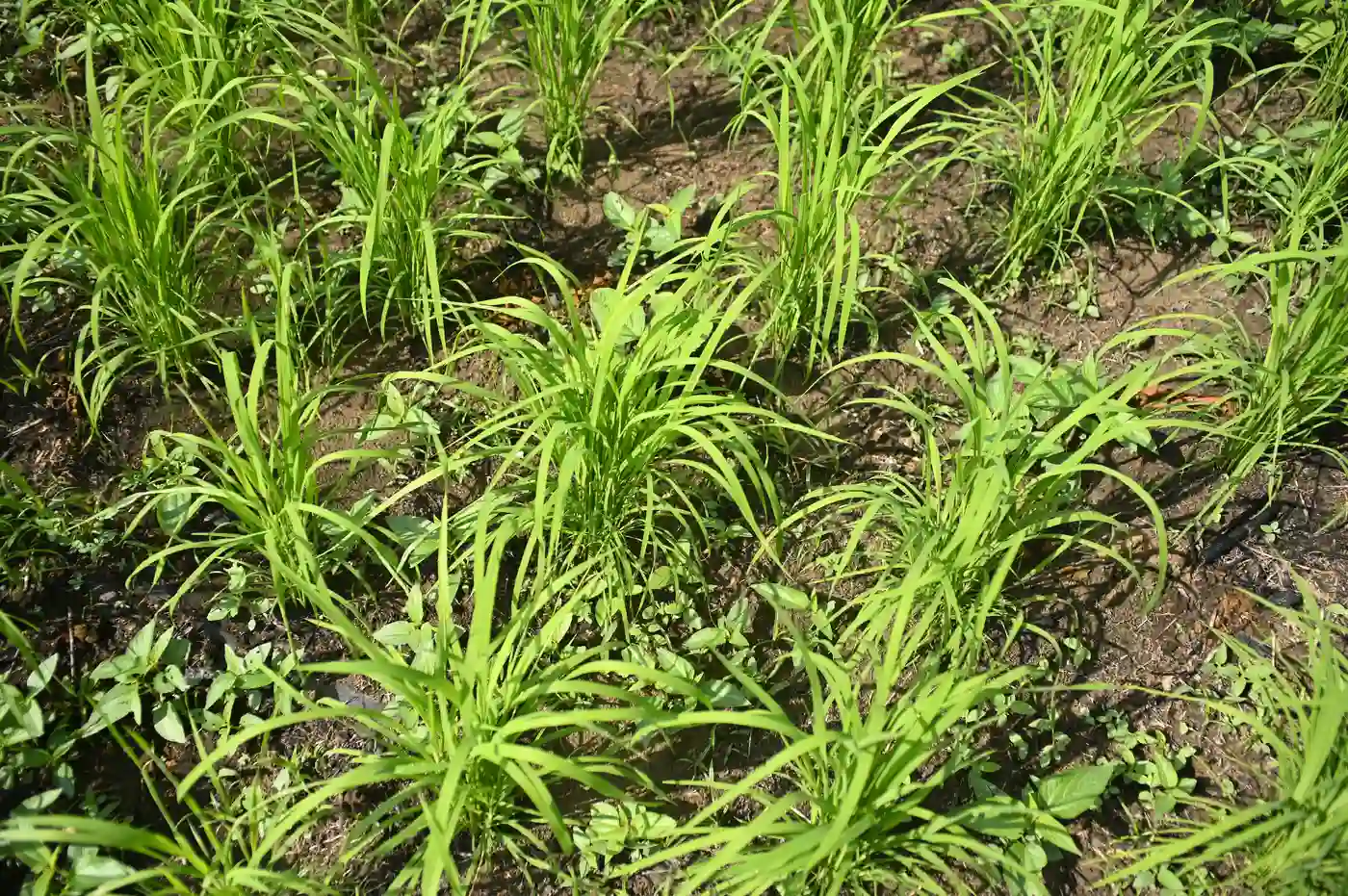
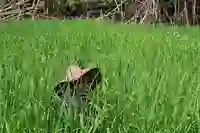
After a month of growth more labour is required of the swiddeners, to pull up weeds from the rice crop which would prevent its growth. This is only needed once but it takes days of work causing sore hands (some weeds have thorns too).
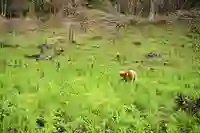
Spinach, squashes and sometimes sweetcorn is sown among the rice plants and these are harvested late in the year to produce food, and in this way the ground is used to its maximum.
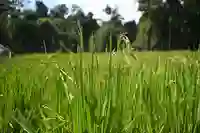
The rice grows with the plentiful rains of November-December.
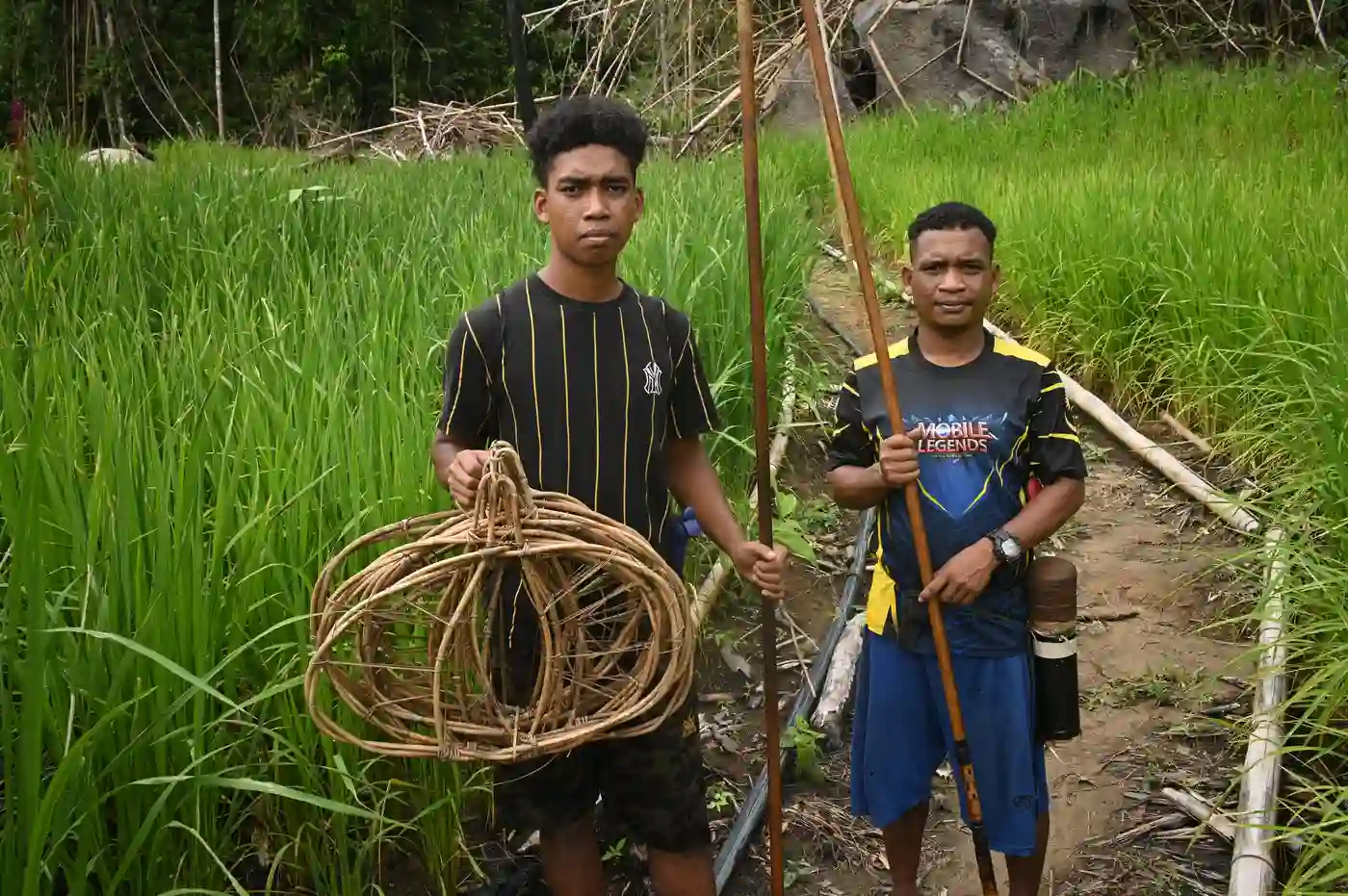
Meanwhile other activities are undertaken, such as setting traps for langurs in the forest. There is really never a day without some kind of task carried out that will provide food.
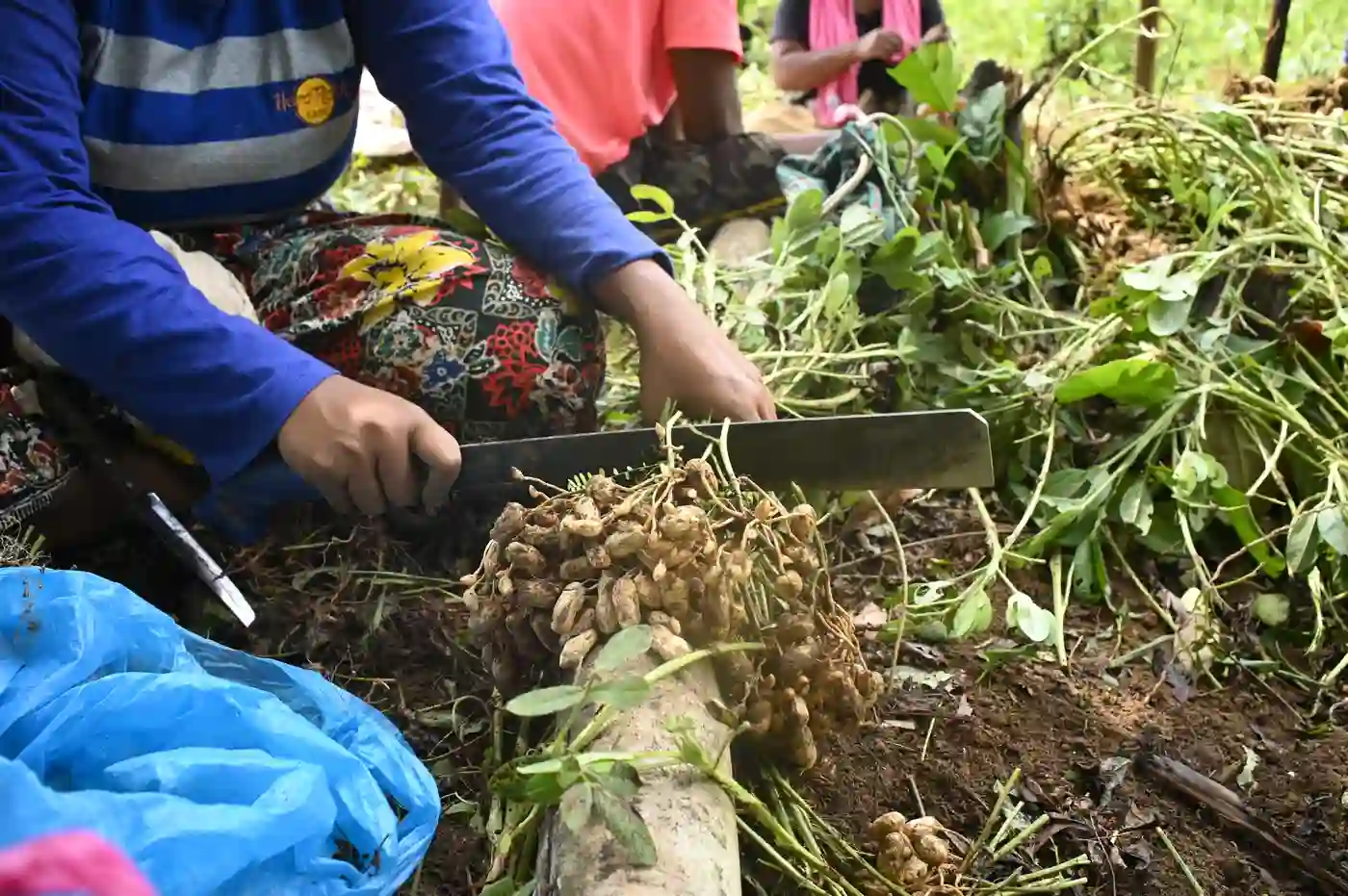
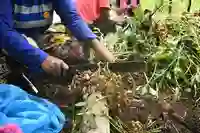
The women folk switch their efforts to the peanuts that were planted before the rice. The peanut plants are pulled up and the stems are chopped off. The nuts are washed at the river, carried home and hung up to dry and preserve over the fireplace. Freshly harvested peanuts are boiled and eaten, while dried peanuts are roasted in a pan or pounded raw and added to cooking to make a creamy broth. They are an essential part of Temiar cooking and are also mixed with manioc pulp.
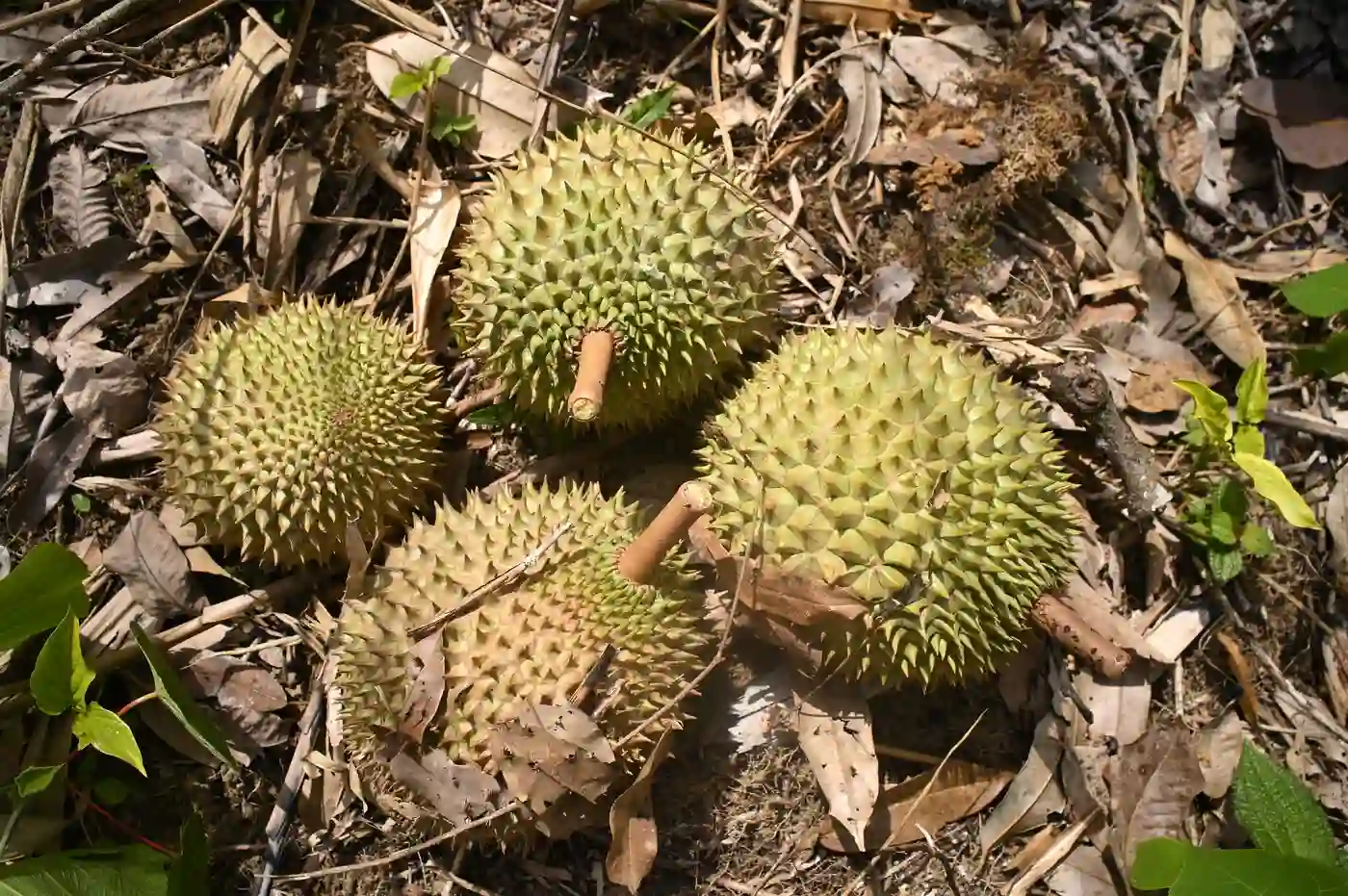
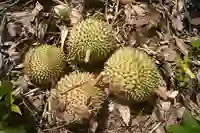
A late fruit season in January can provide another food supply to help the swiddeners, that of sweet and filling durians!
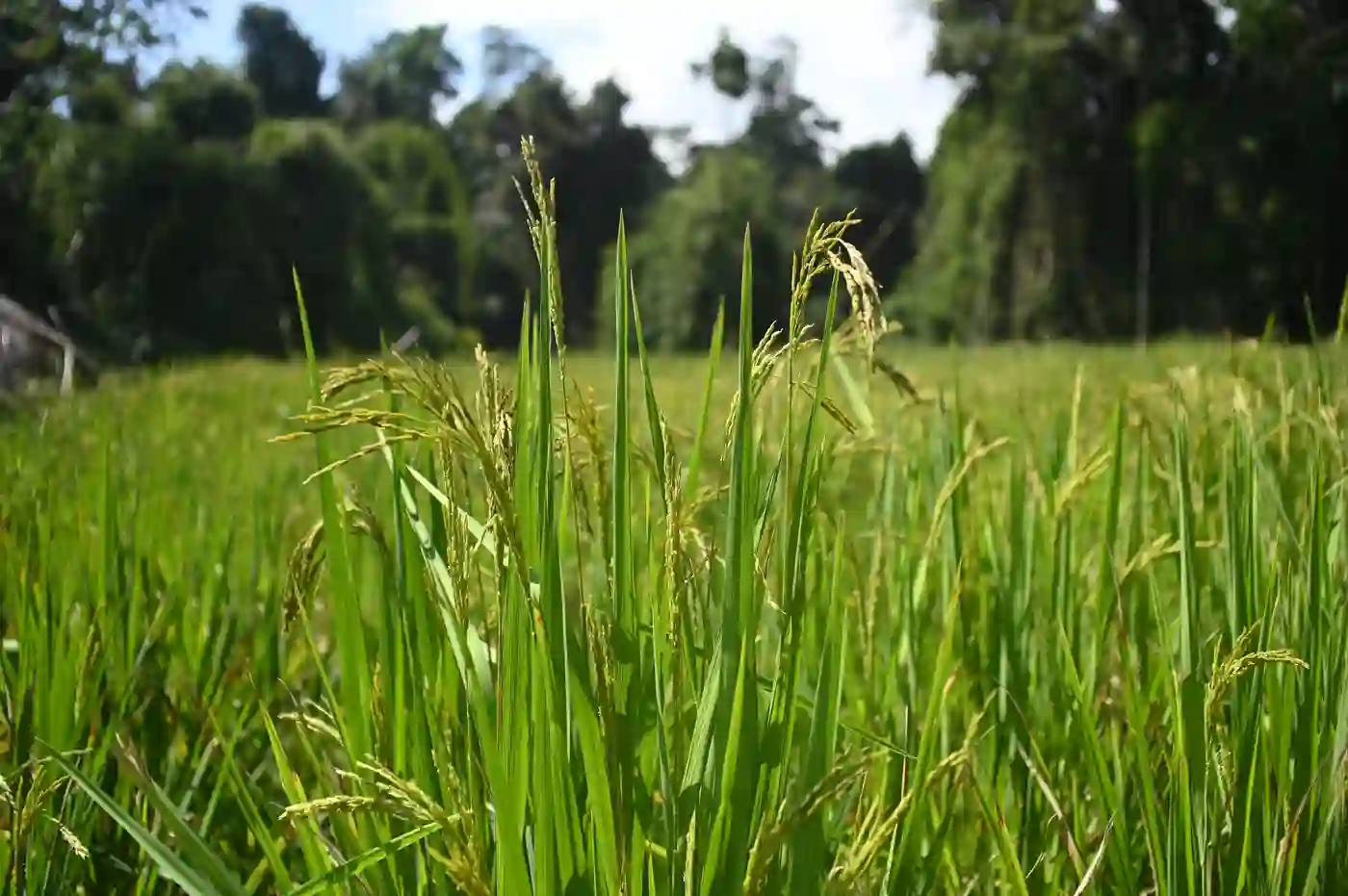
The rice heads begin to make grains. At this stage macaque monkeys and birds are the common pest. If the swiddeners do not guard the crop the birds can almost completely finish it off.
The rice heads begin to ripen. At this stage monkeys are still a pest and the elephant could also rampage through the crop, stripping the rice off the stalks.
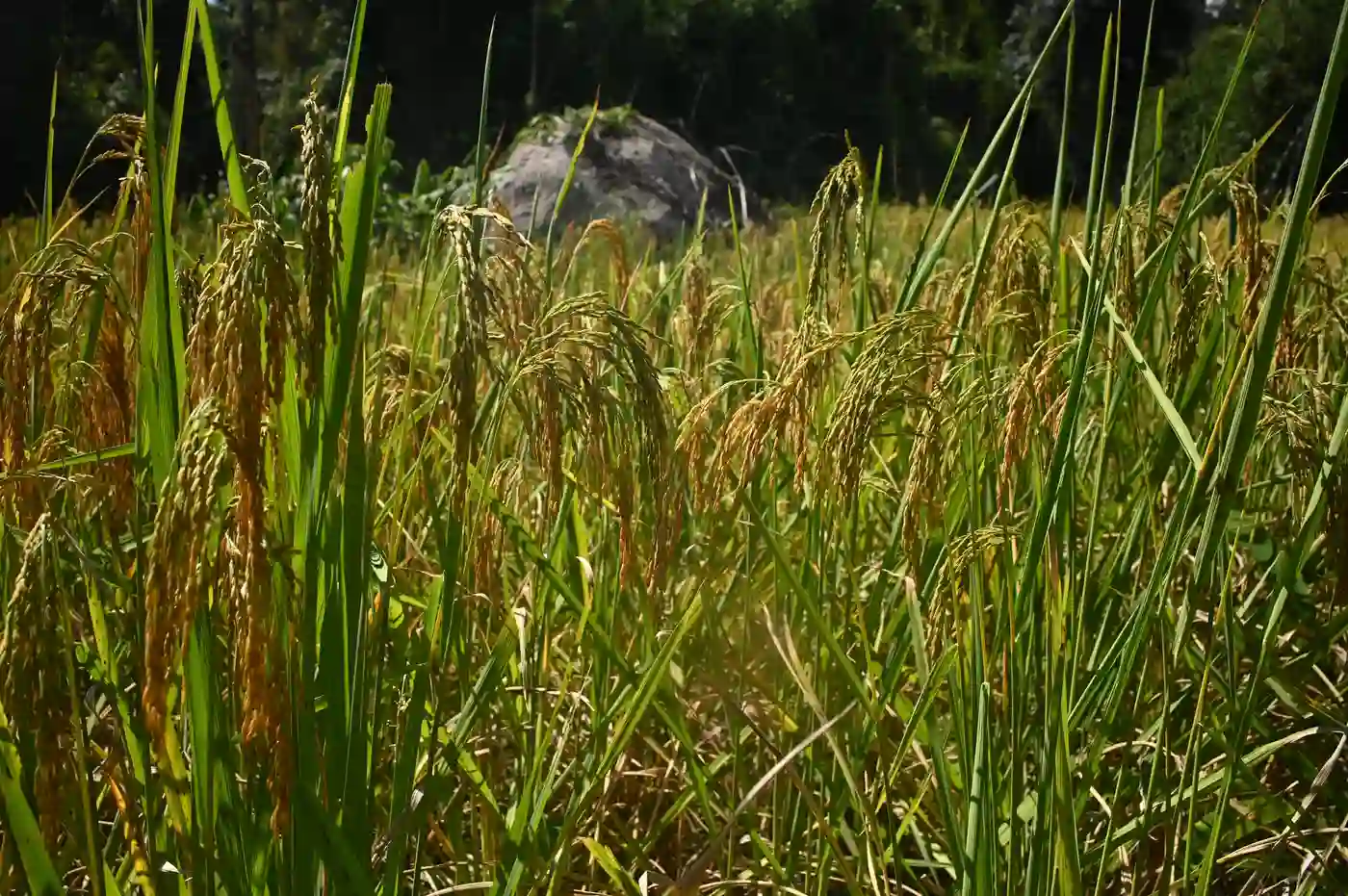
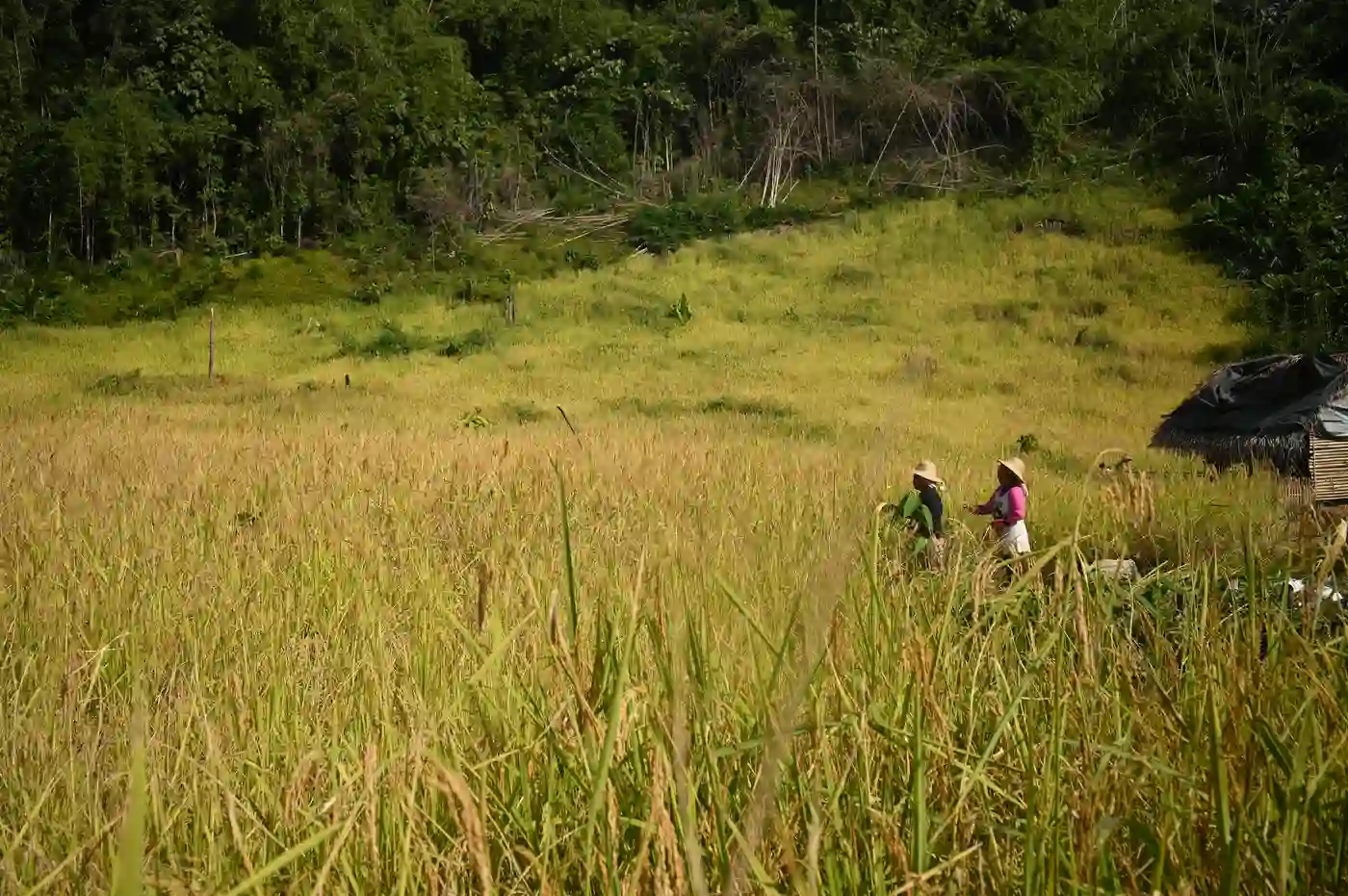
Tn rice crop ripens and turns colour, beginning to turn golden. This is the sign that the crop is almost ready for harvest and the swiddeners start to prepare.
On a set day, the swidden owner goes to the field and cuts a sackful of rice, enough to make a feast for the village.
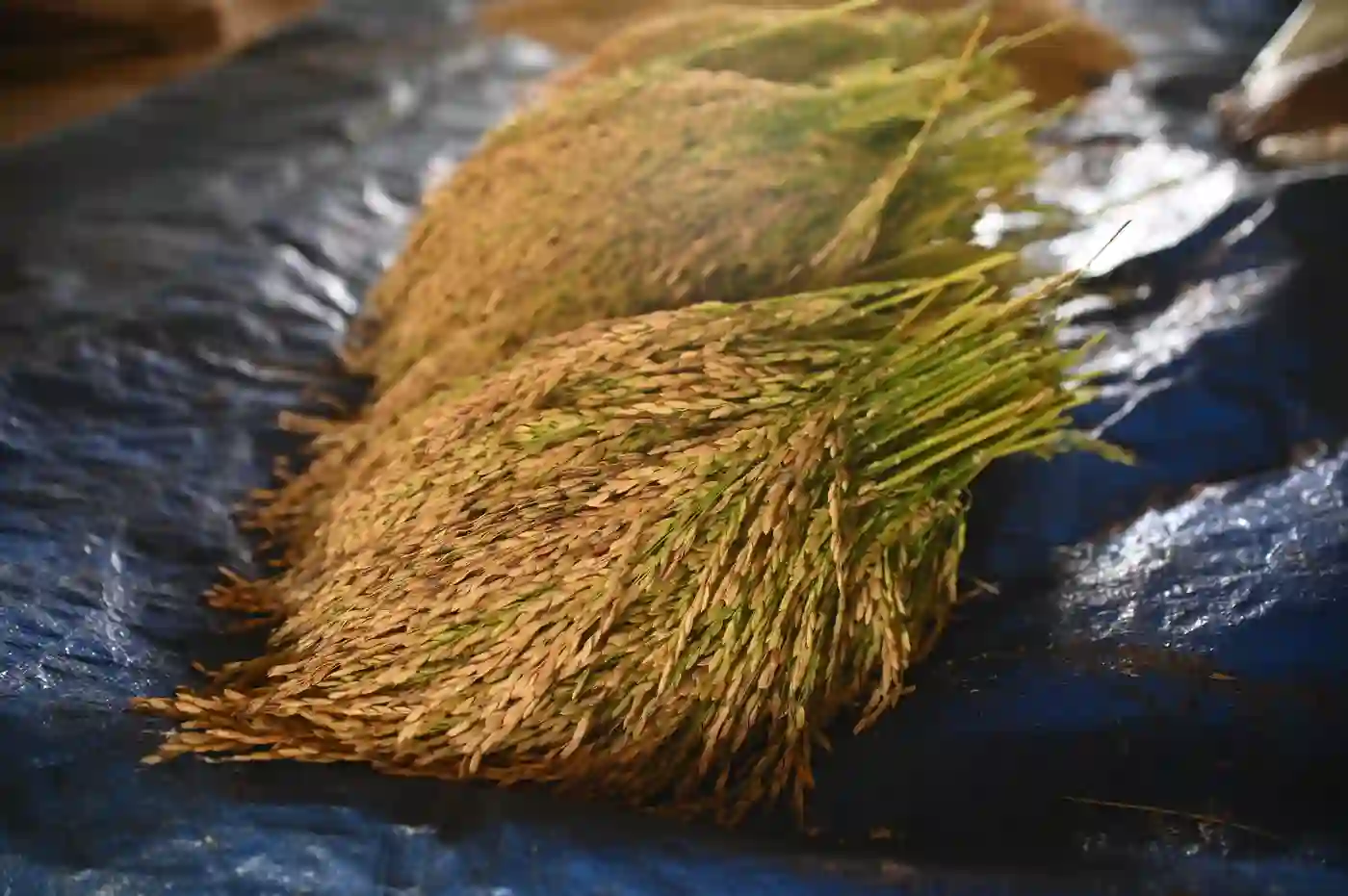
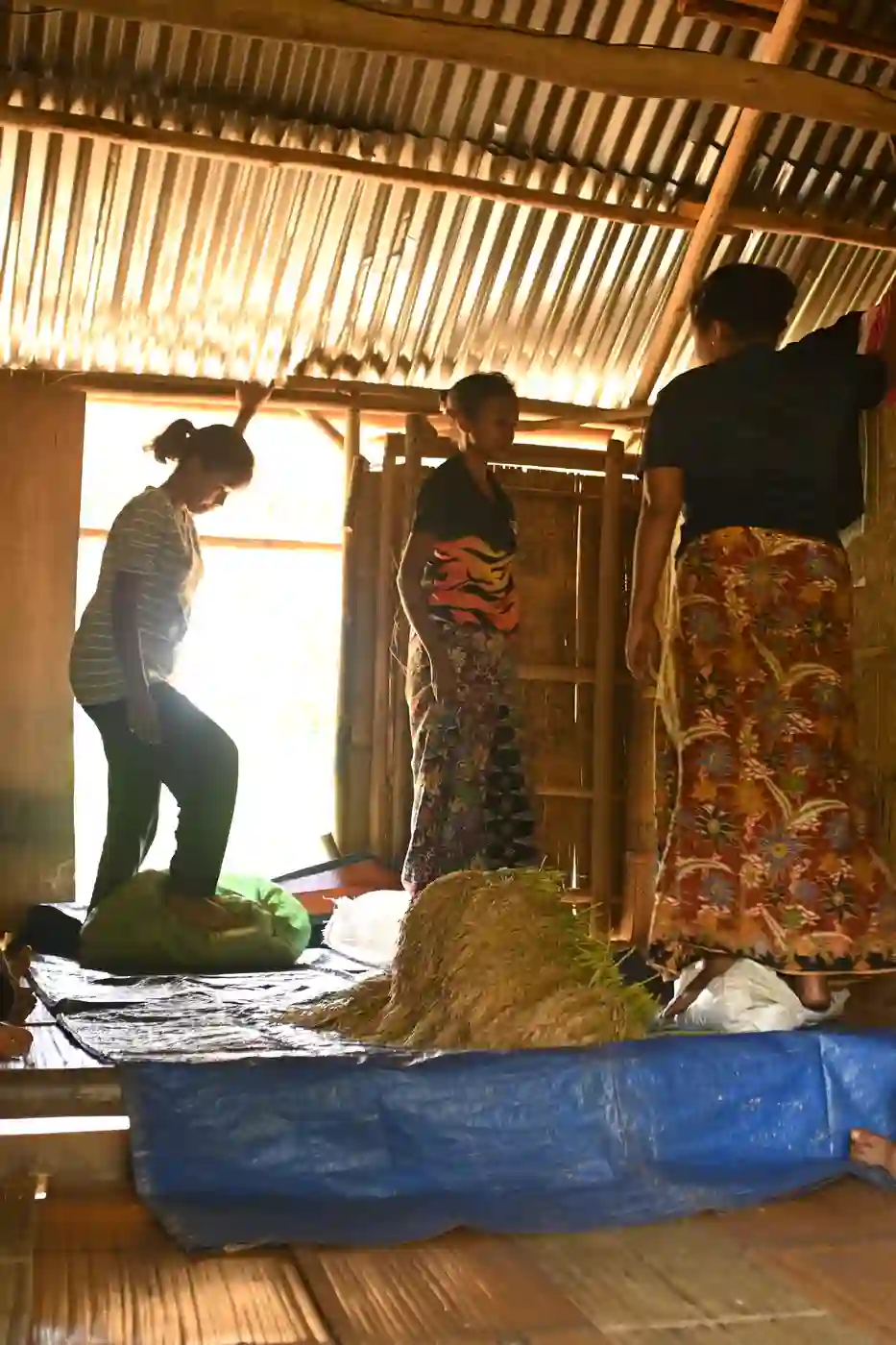
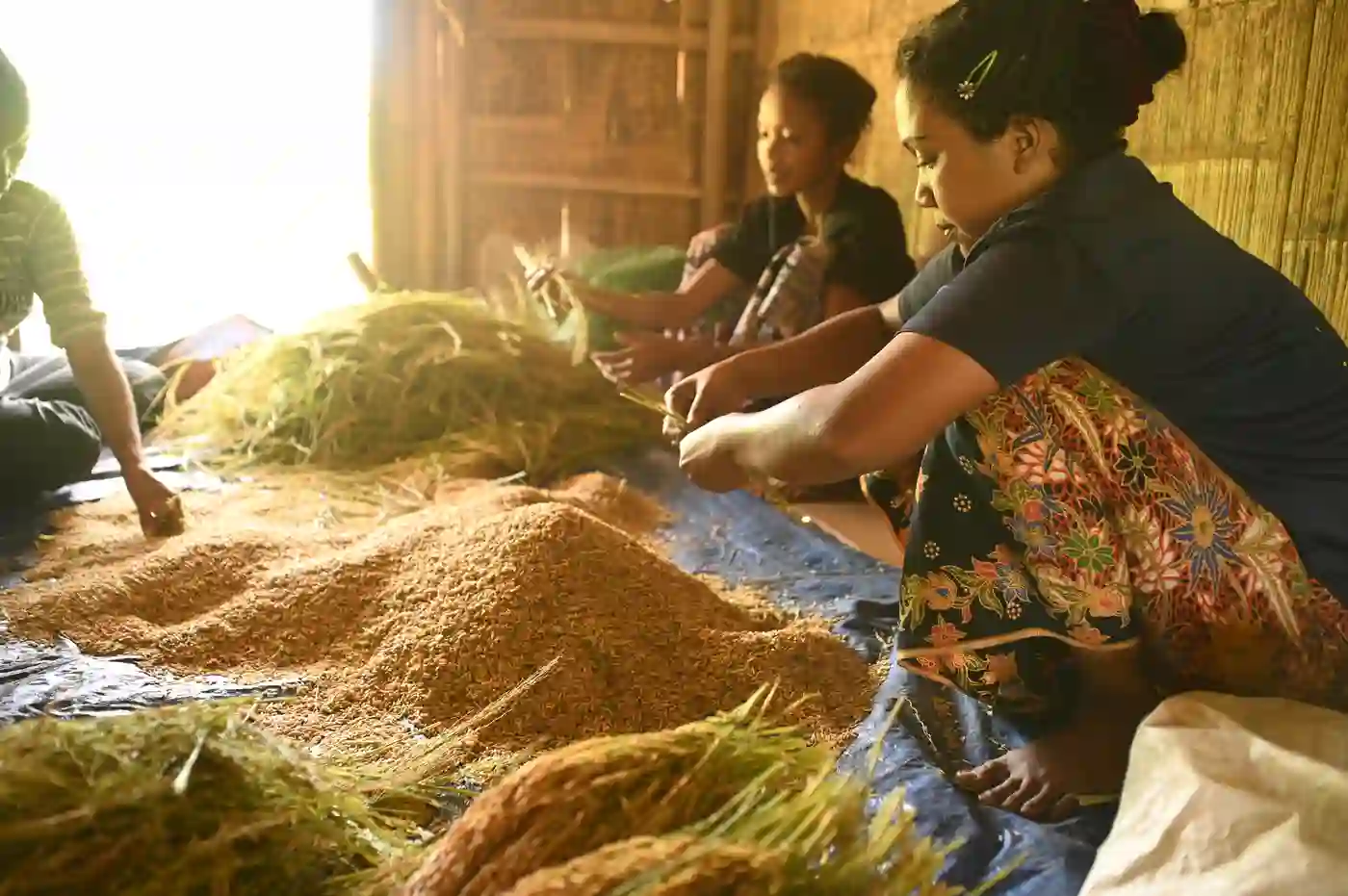
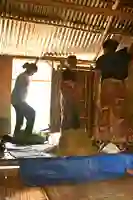
The rice is brought back to the house and laid on the floor with the greatest respect. The Temiars are never aggressive with their food crops and never throw or thresh the rice which would cause it harm.
The rice heads are trodden in sacks to loosen the paddy grain from the stalks.
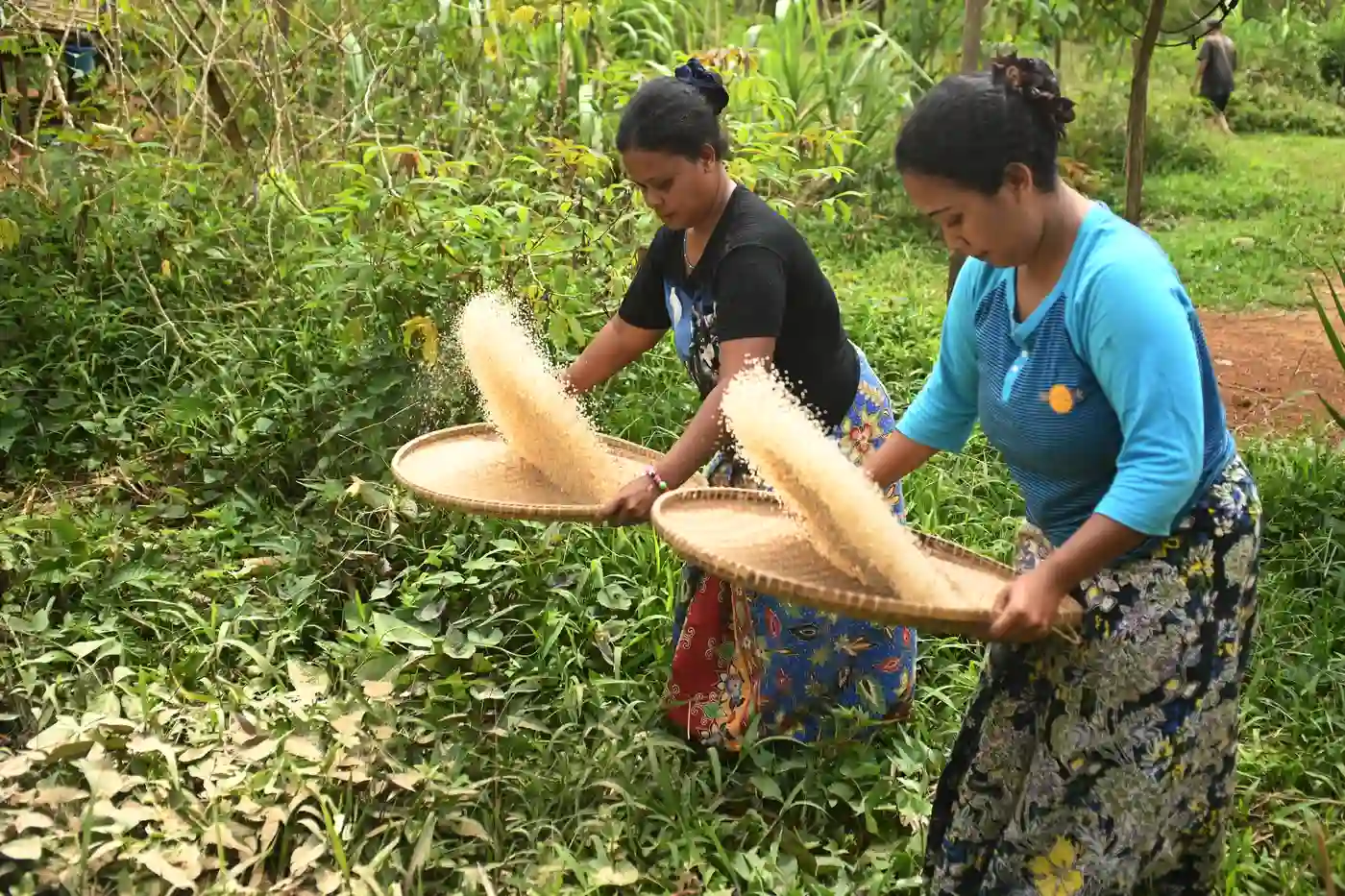
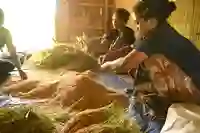
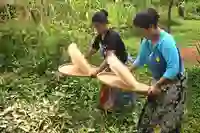
The bare stalks are carefully removed from the paddy, which is then tossed on a tray to allow the chaff to blow away.
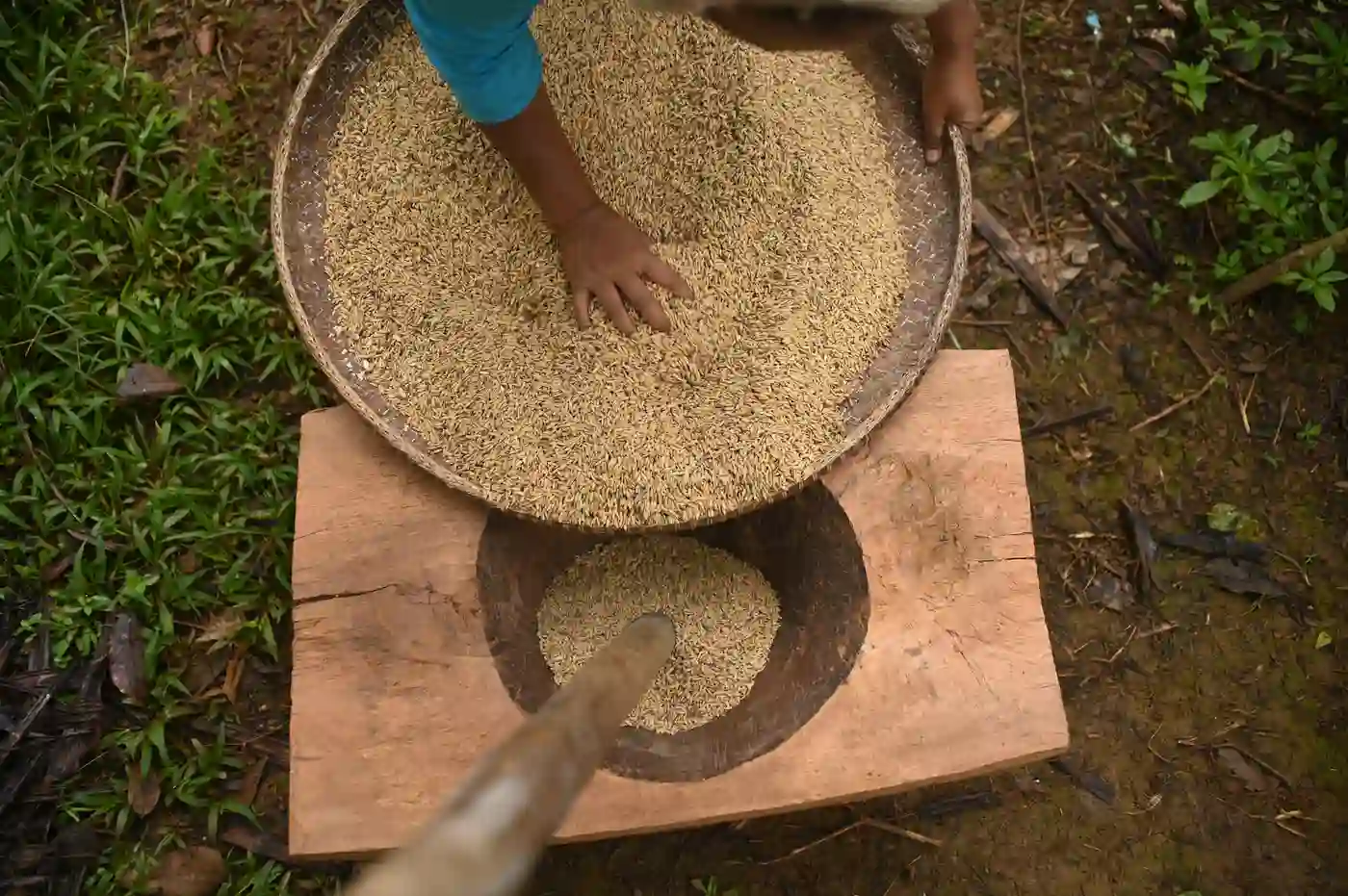
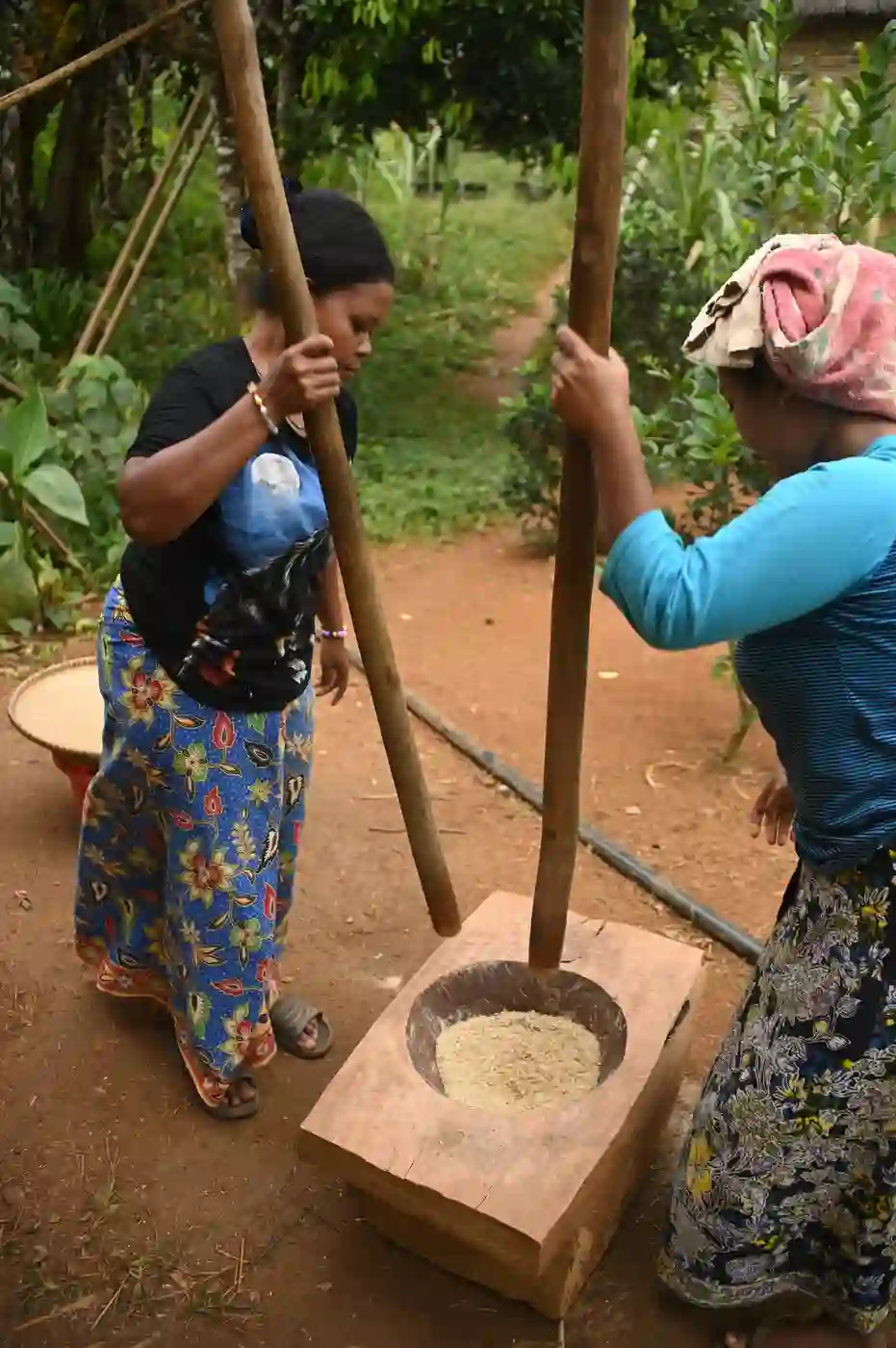
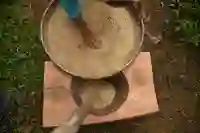
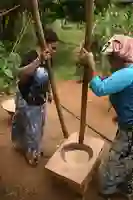
The clean paddy is then pounded in a wooden mortar with poles, which is a very energy-consuming process that causes sore arms.
The rice is pounded until it appears to be 95% removed of husk. Sometime up to four persons pound at one mortar, but usually only two take on the task.
The pounded rice is tossed on trays again to allow the husk to blow away, after which any rice with husk is separated and returned to the mortar for another go.
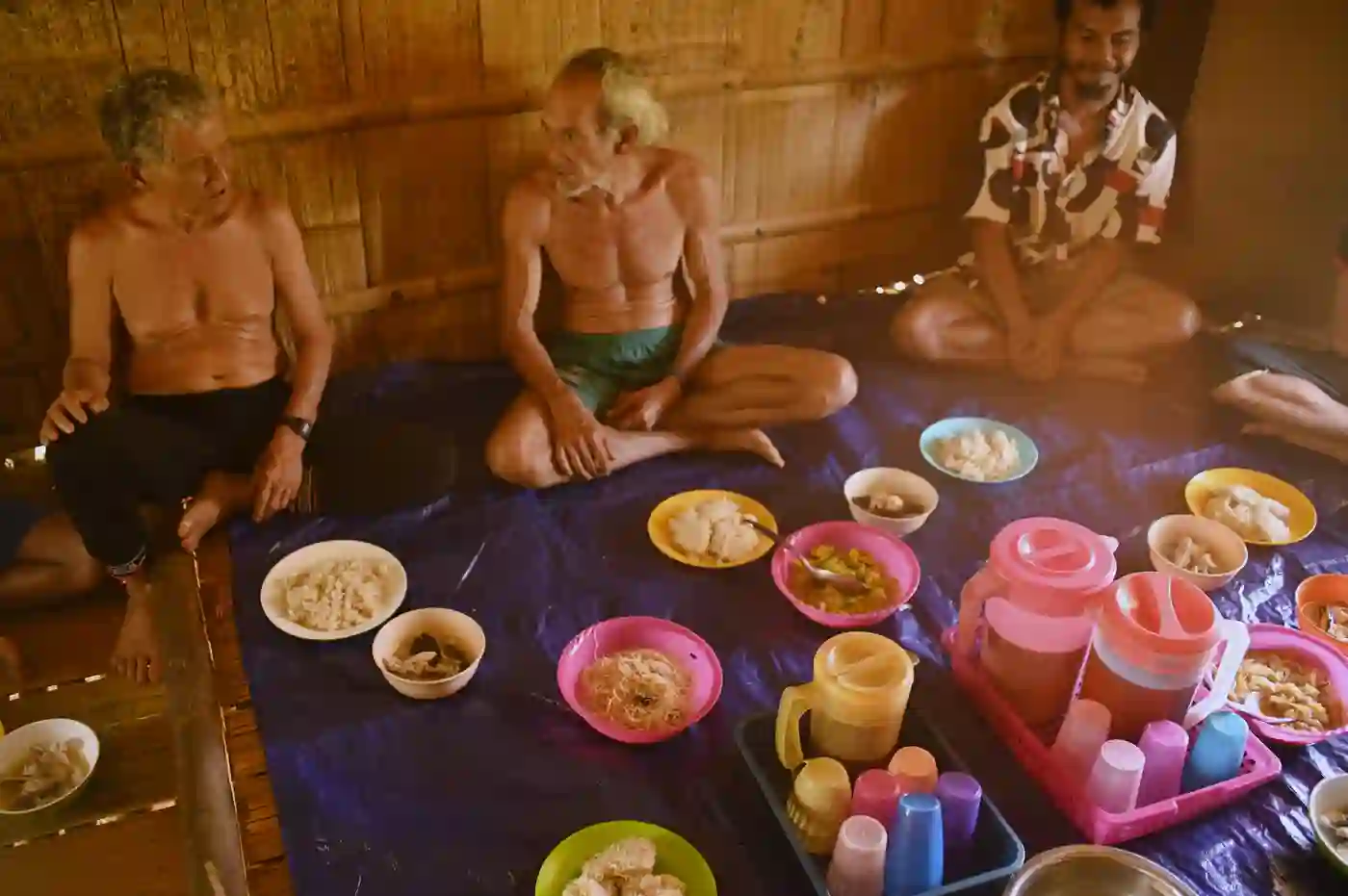
The feast is held the day after the first sackful of rice is gathered, with as much game, frogs and fish as the villagers can gather in one day and one night.
The day after the feast, the harvest begins in earnest, and the swiddeners start cutting rice at the edges of the field.
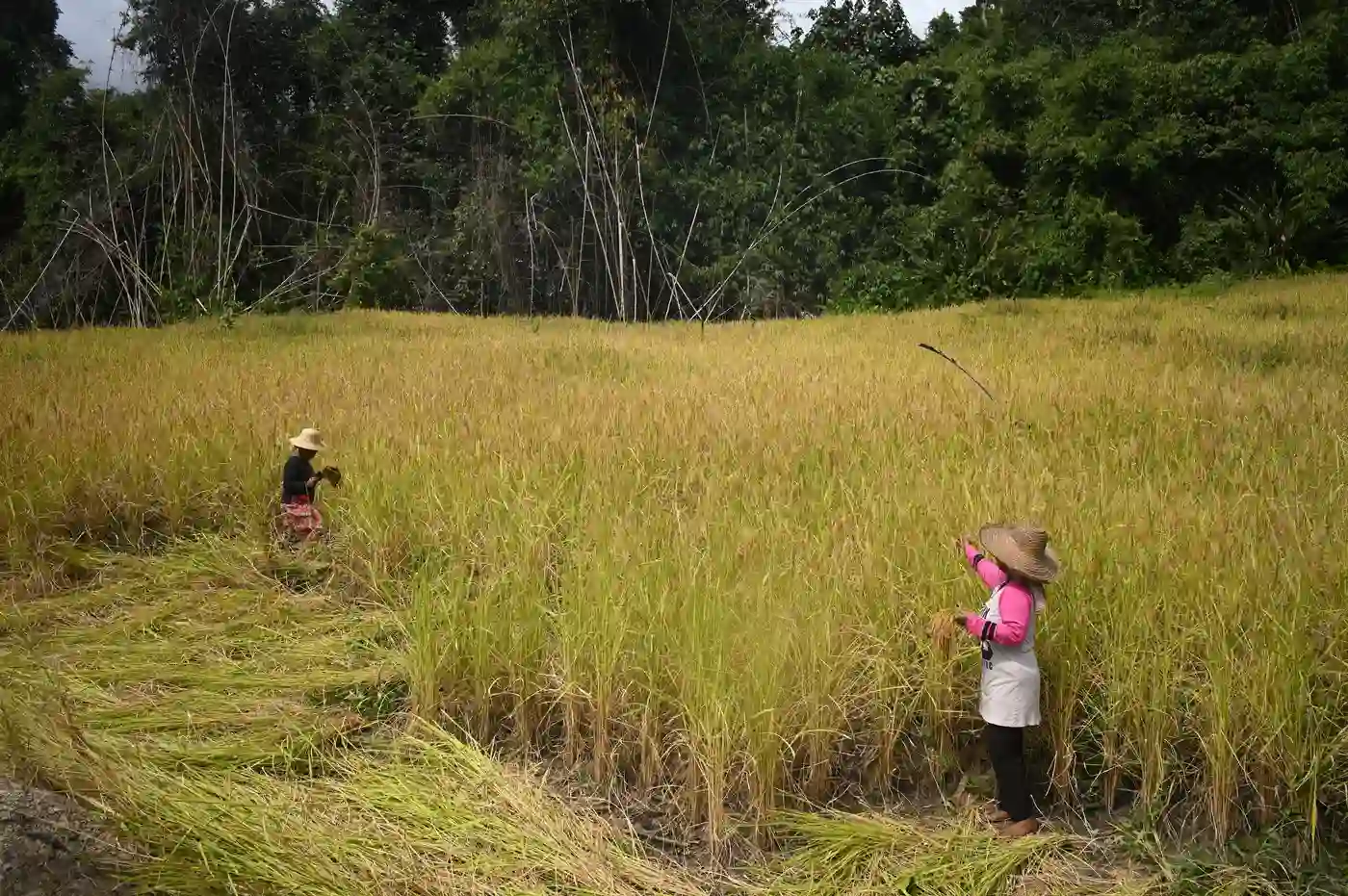
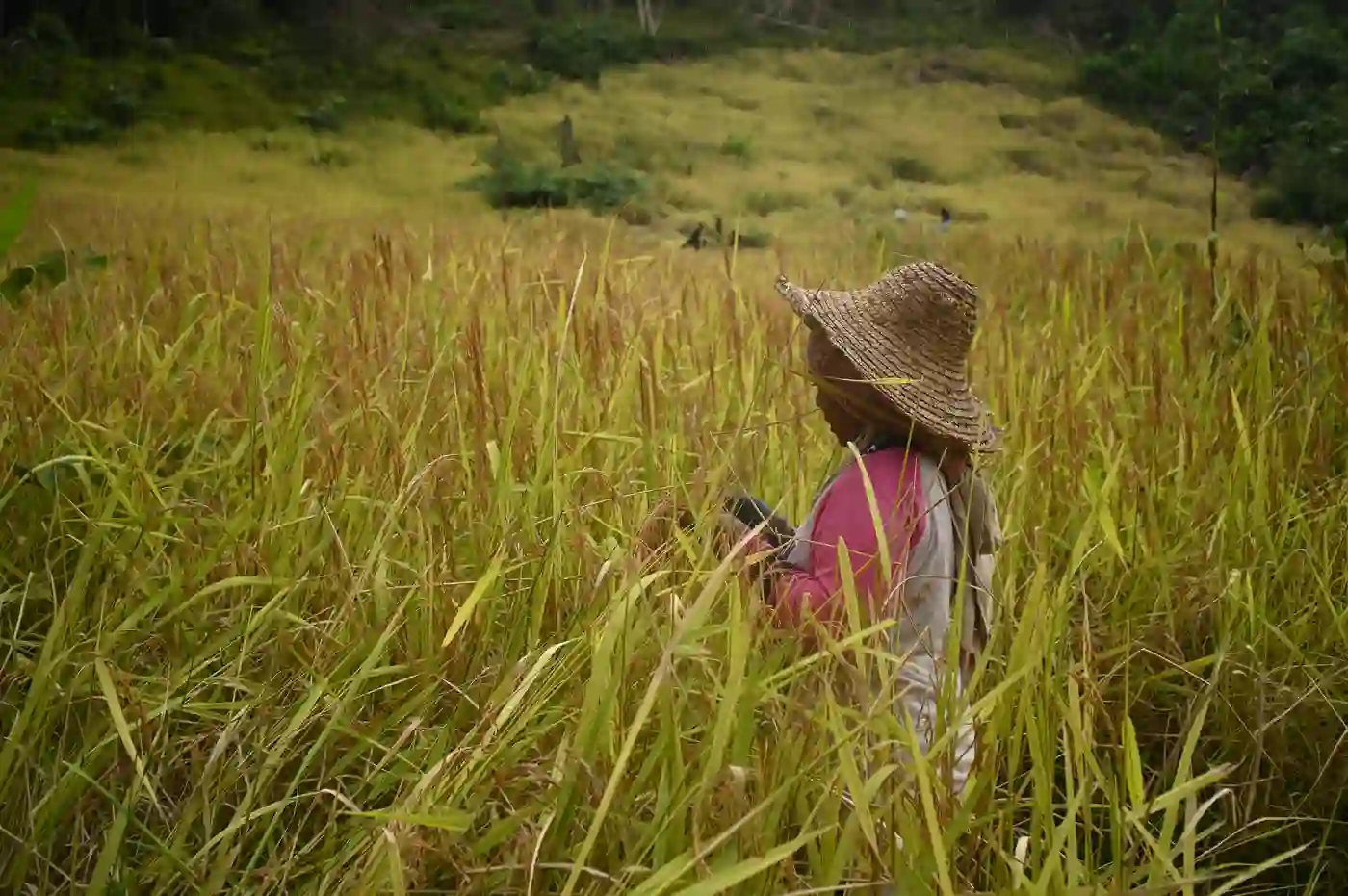
Day by day they cut rice, working to penetrate into the standing rice. A rice swidden is often planted with up to 4 or 5 different kinds of rice, each with its own name, planted in different sections of the swidden, which are marked with bamboo poles on the ground. The swiddeners harvest each variety one after the other to keep them separate.
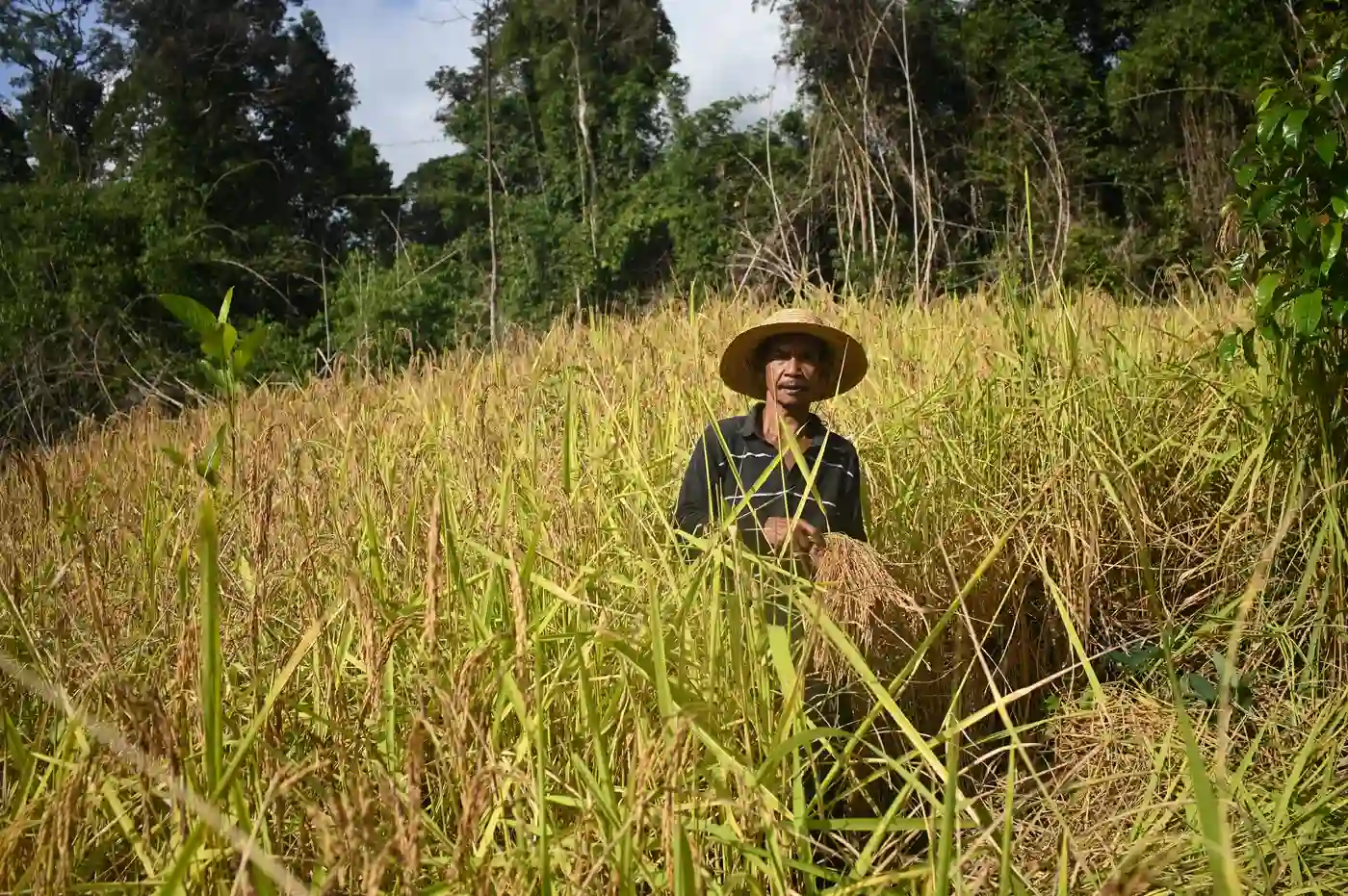
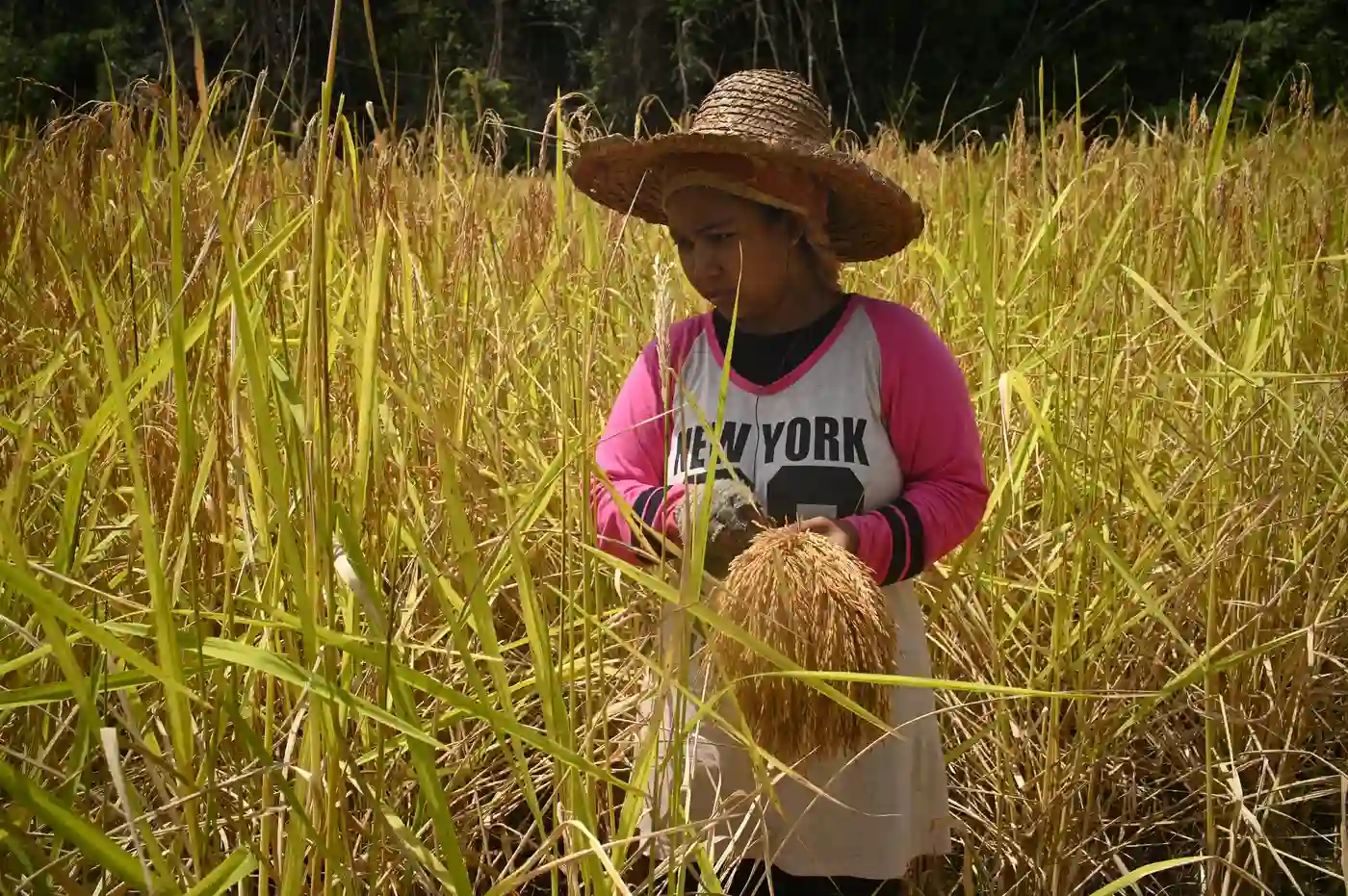
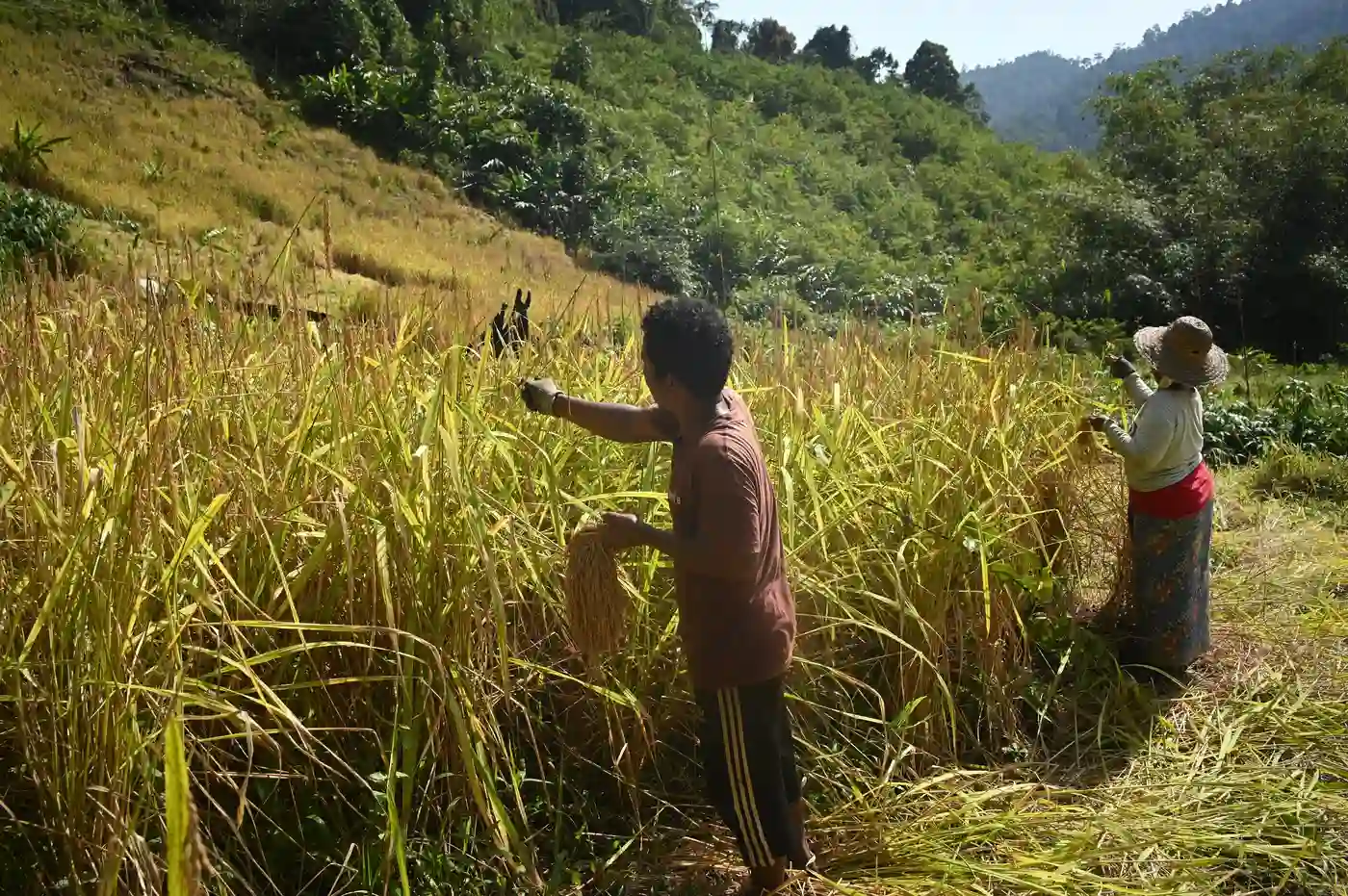
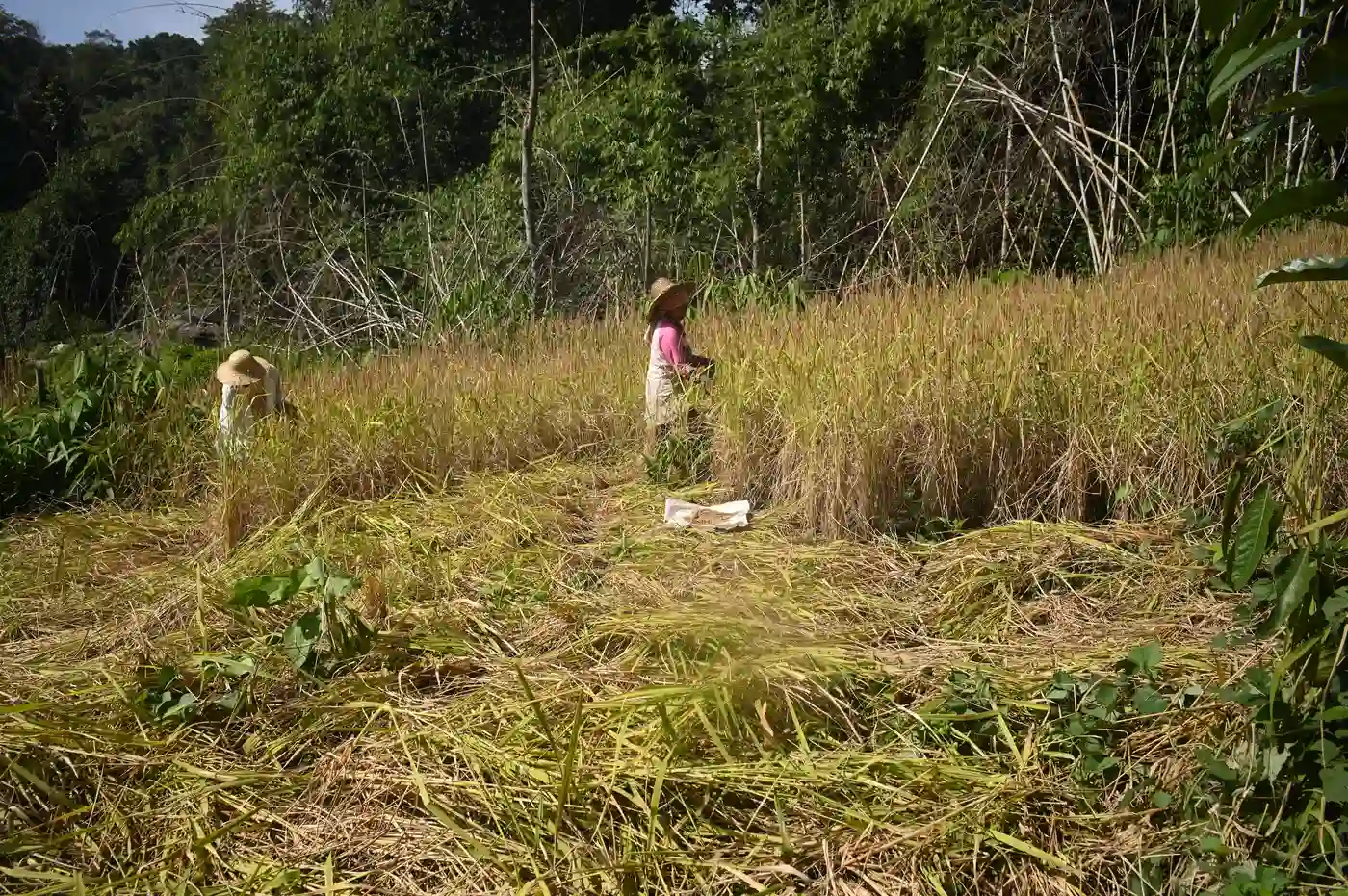
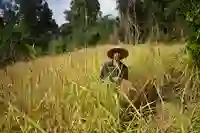
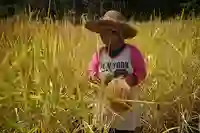
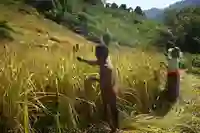
The harvester cuts the rice heads near the tops and holds the heads in the hand until there are too many to hold and then they are laid on a sack. The Temiars do not cut with a sickle as this would require vigorous threshing which is too violent toward the crop. The process takes almost forever compared to modern mechanised techniques.
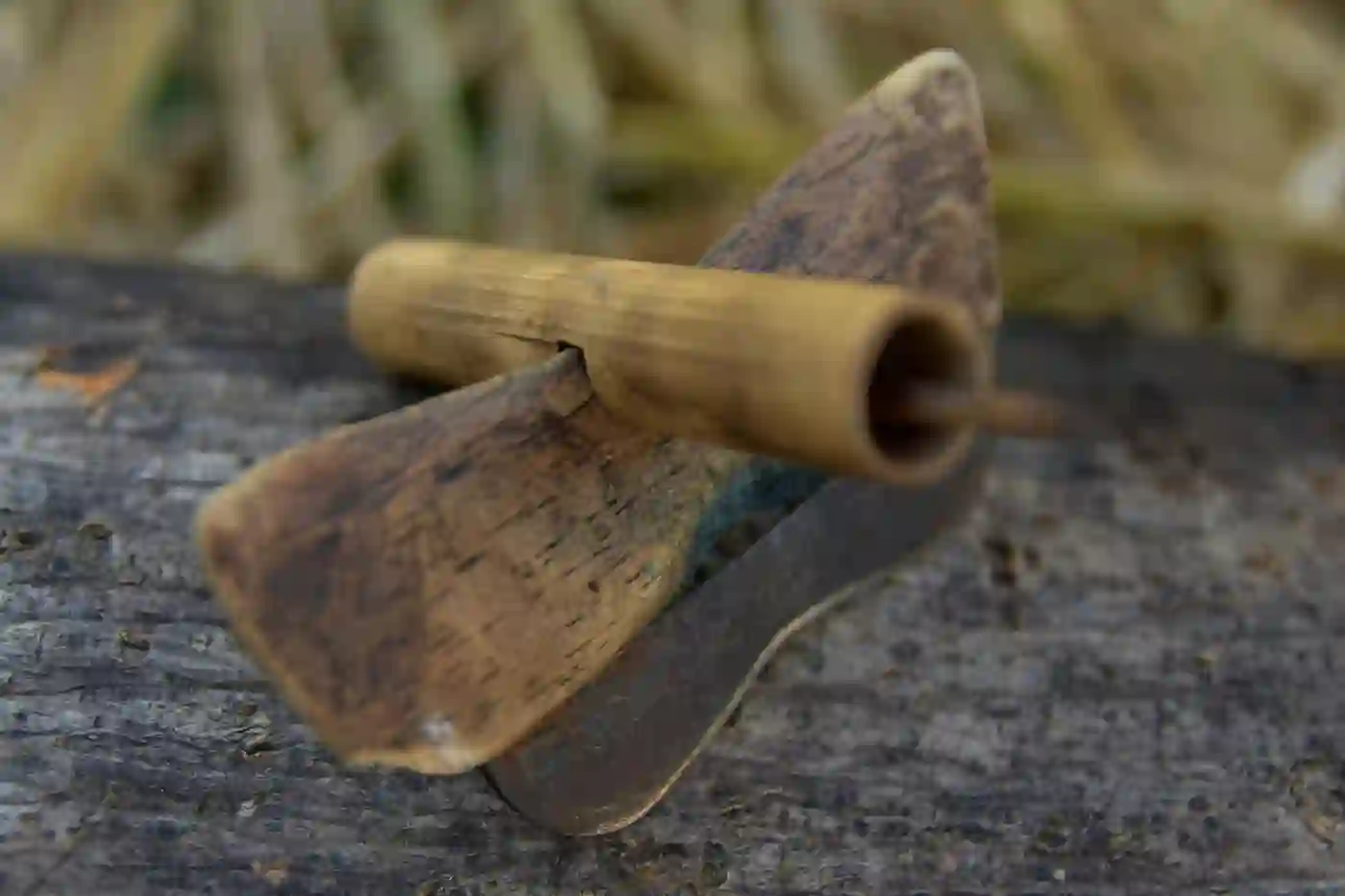
The cutting tool is made from a small blade fitted into a bamboo handle. The rice heads are cut off with a press and tug technique.
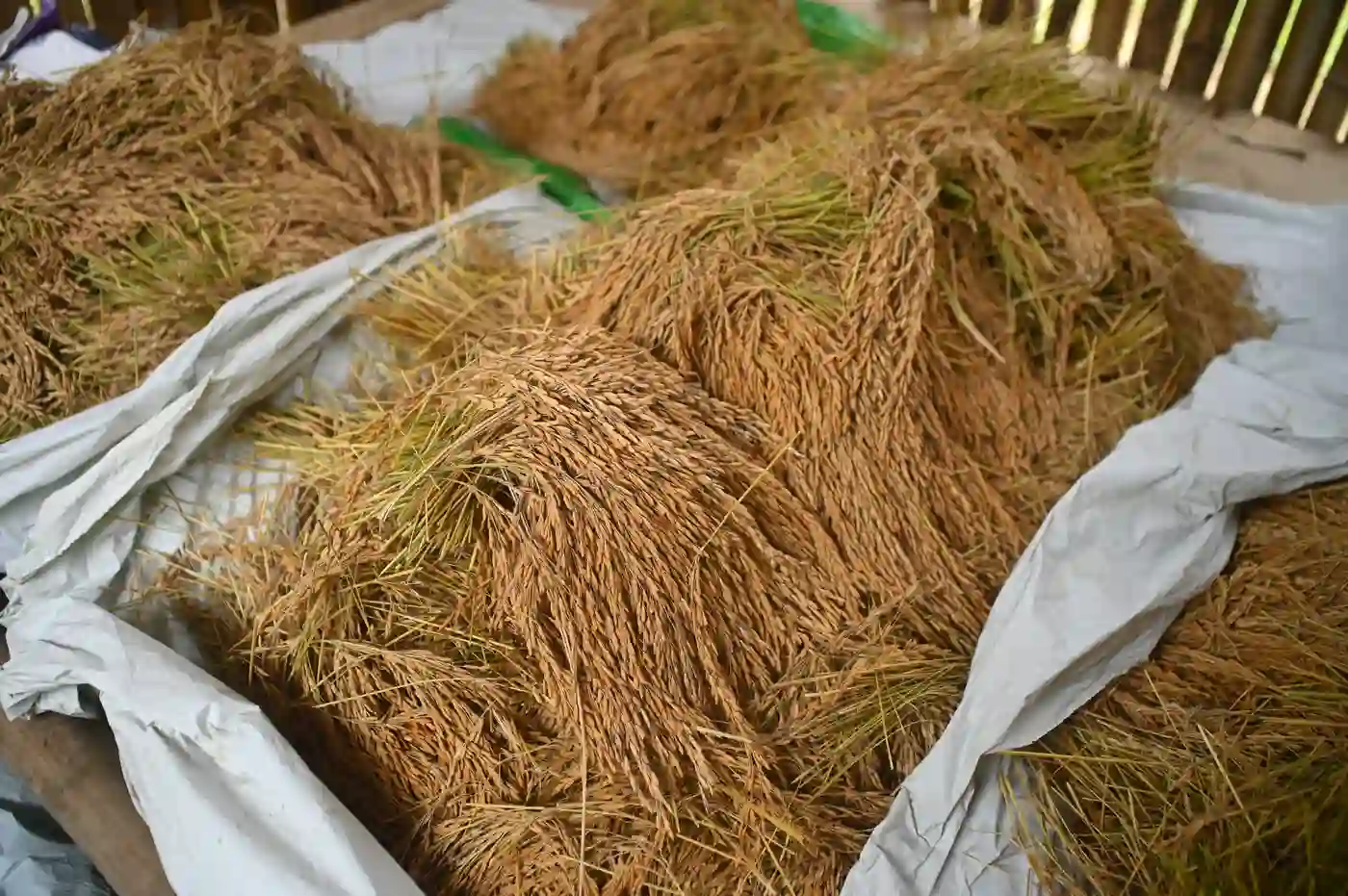
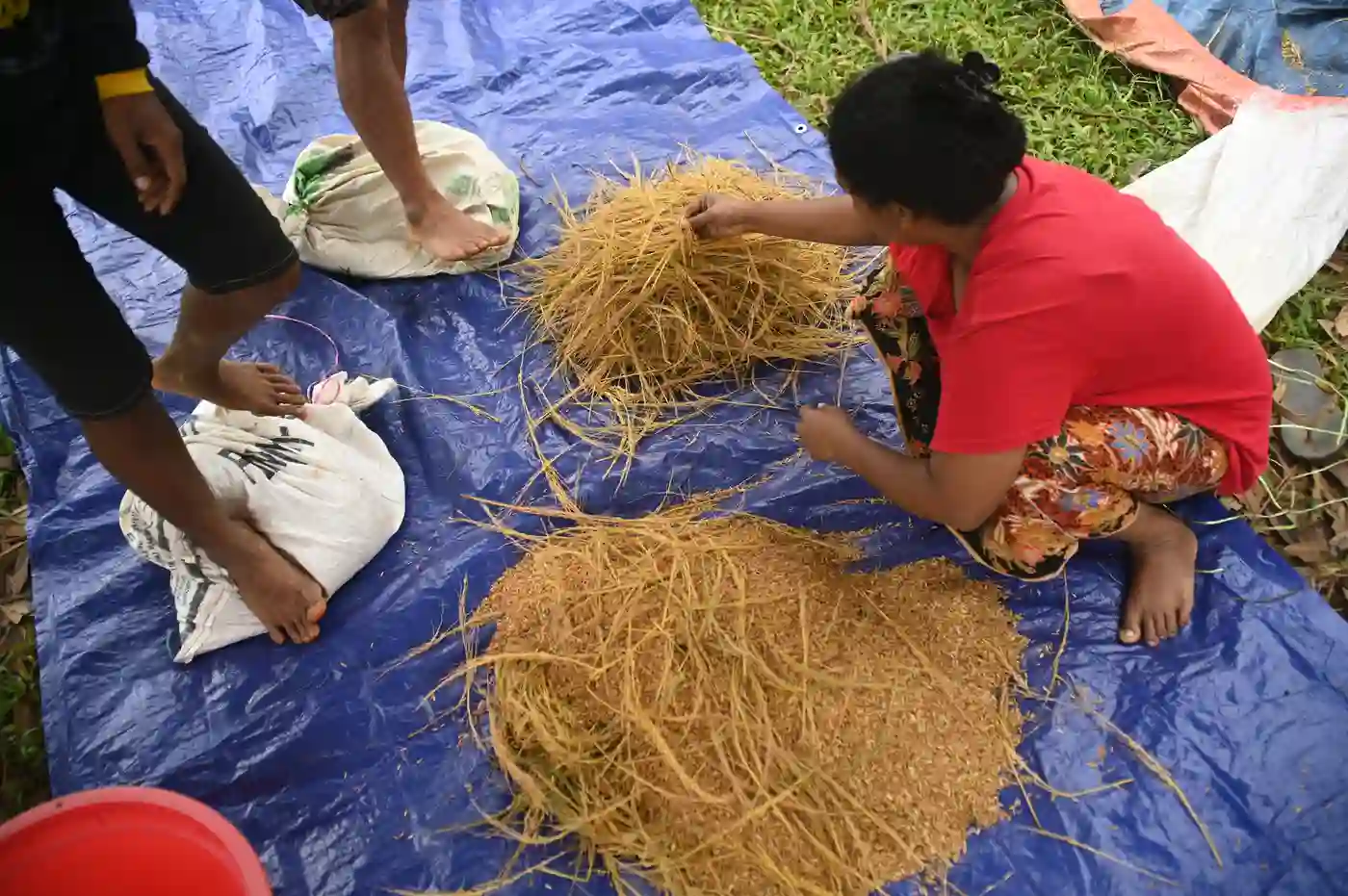
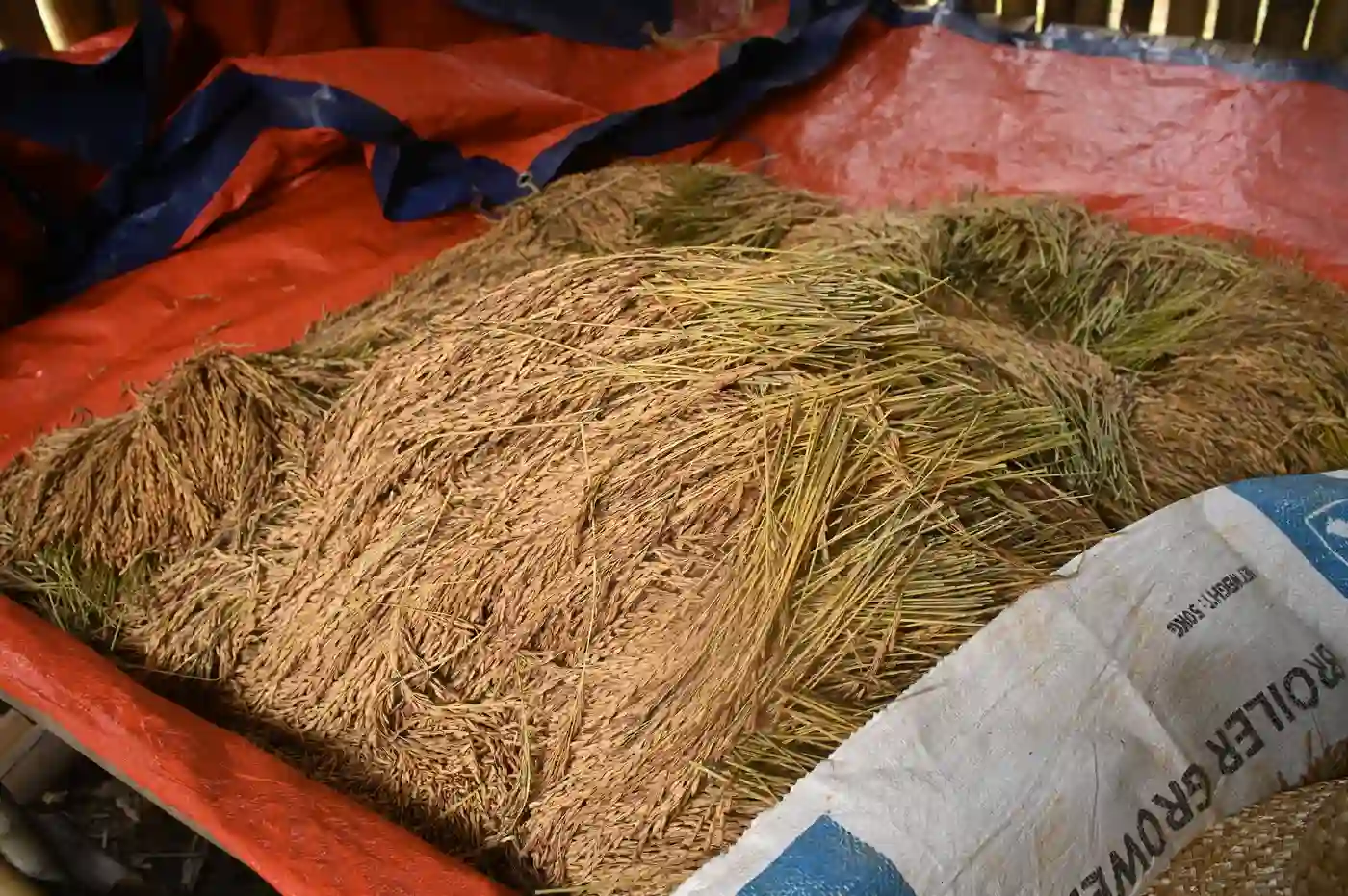
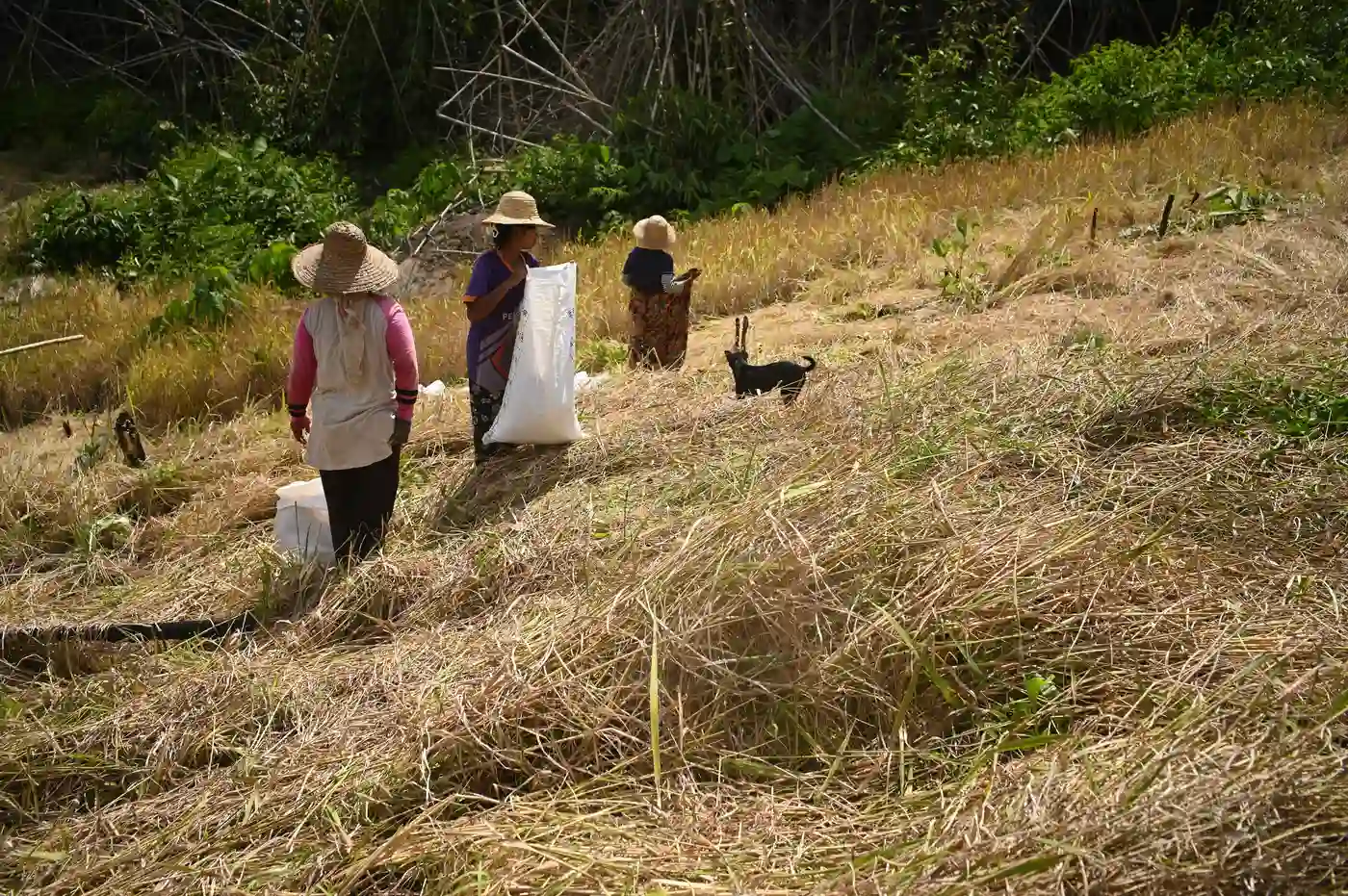
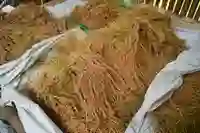
The rice harvested in a day is quickly stuffed into sacks and stored in the swidden hut, before being carried back to the house.
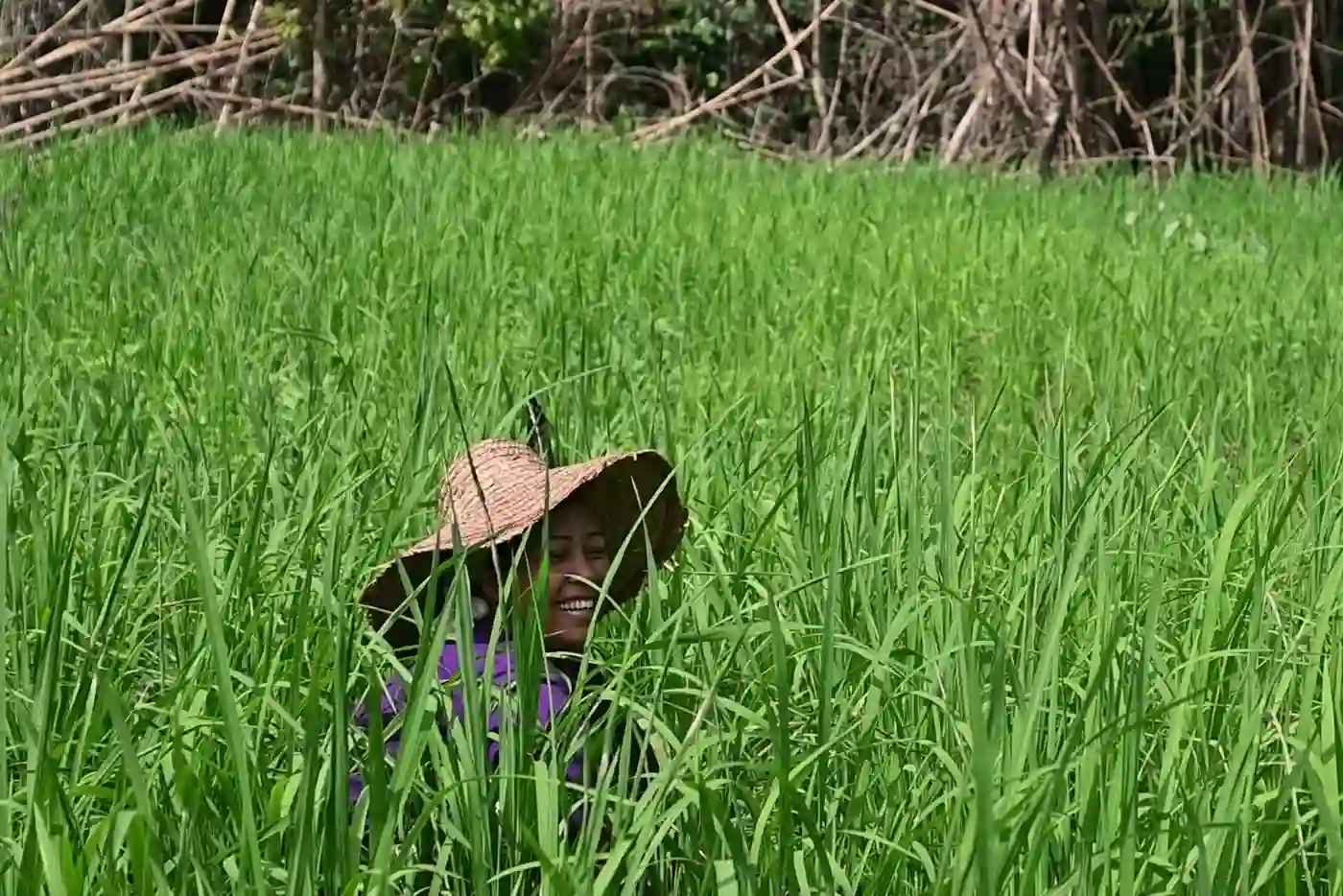
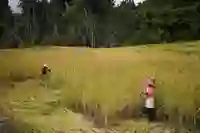
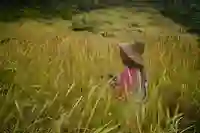
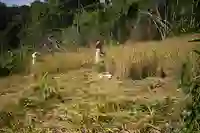
The work continues in the scorching hot sun. The swiddeners have no choice but to stand in the field for hours cutting because rain could come later in the day and stop the work.
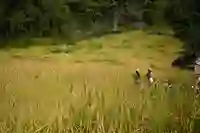
Even with a swidden covering several acres the harvesters must persevere. If they take too long the rice stalks will begin to bend over and if it rains too much the rice could sprout in the heads.
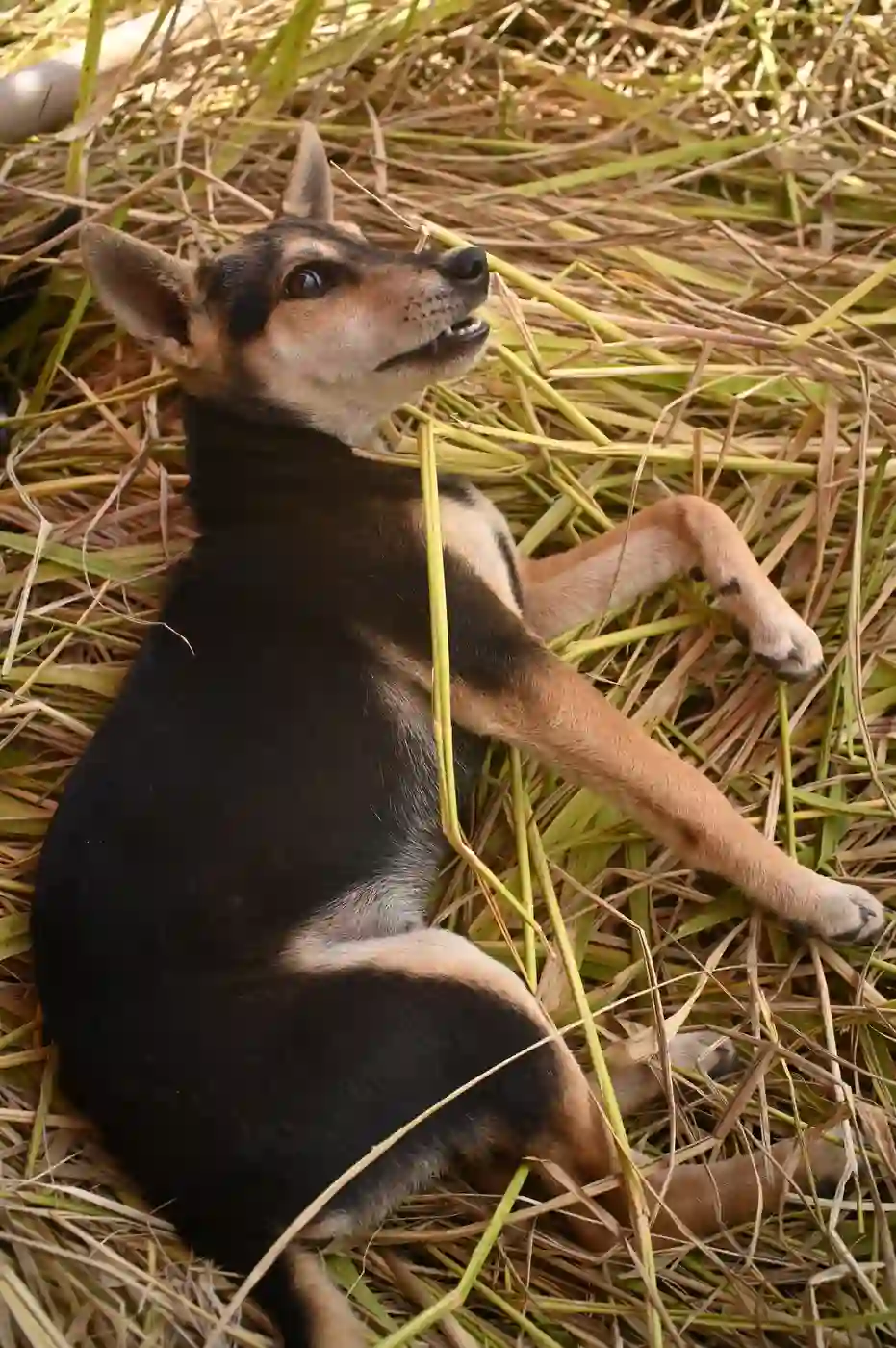
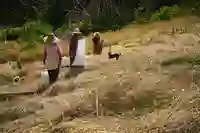
Everyone deserves some rest in the shade! The dogs stay by the swiddeners and give warning of any animals lurking in the surrounding jungle.
After the rice heads are cut the stalks are trodden down with the foot. Later on, once the harvest is finished, the field is burned and peanuts are planted again on the same land.
Finally the end of the harvest is reached after weeks of standing out in the sun, sometimes suffering from hunger and nearly fainting because of thirst. The swiddeners have no time to make food from the harvested rice and find whatever they can to eat.
Heaps of rice were harvested in 2026, which was the first significant harvest in seven years.
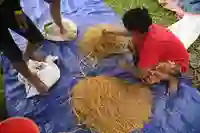
The next stage of the harvest is the treading of the rice heads in sacks to collect the paddy grain. This can take another two weeks of work if the quantity of rice is large. In 2026, 43 sackfuls were gathered from one swidden alone.
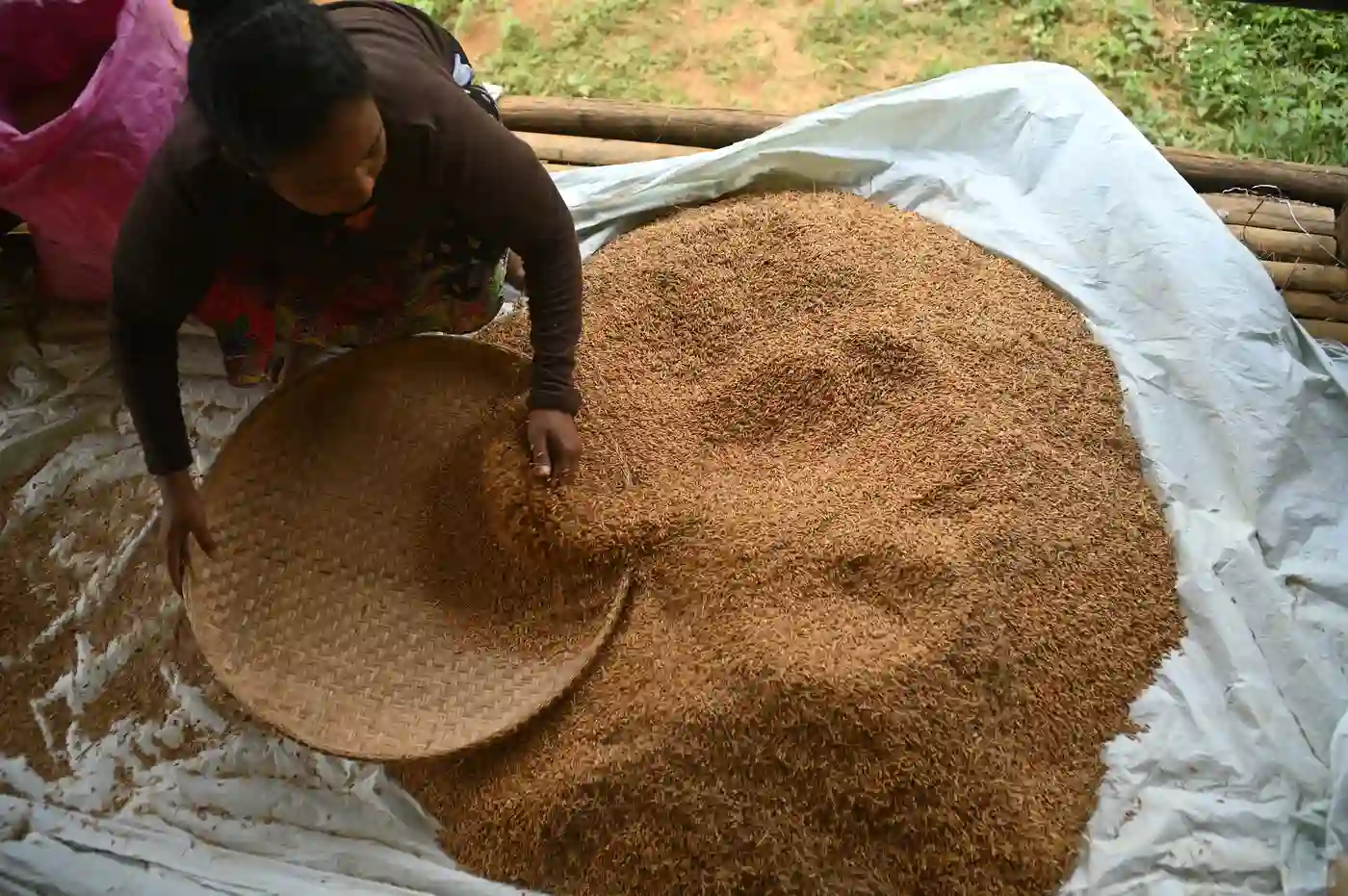
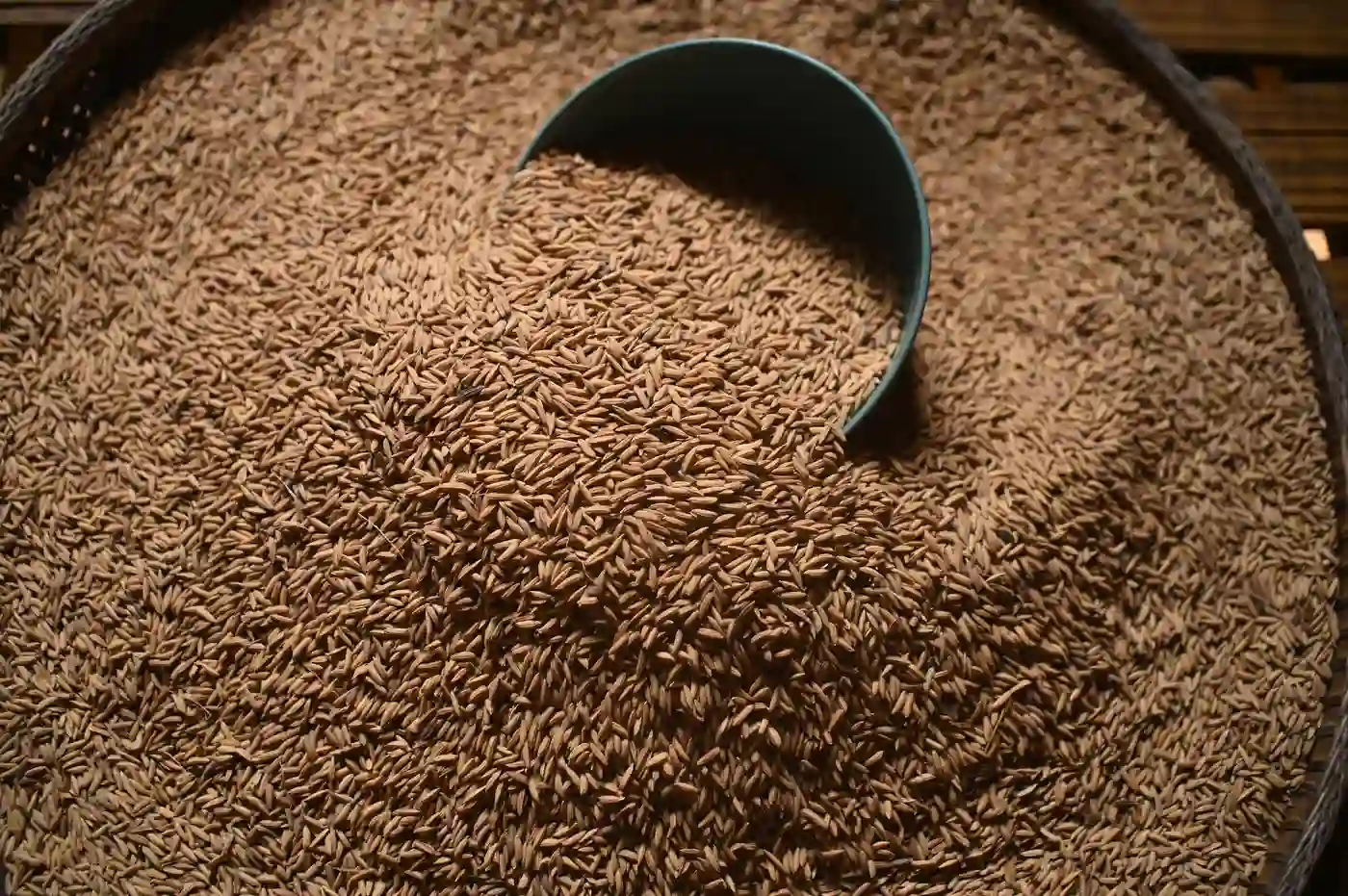
After the treading the paddy is winnowed and sifted using a rice tray to clean it. The paddy is precious and none is allowed to fall to the ground.
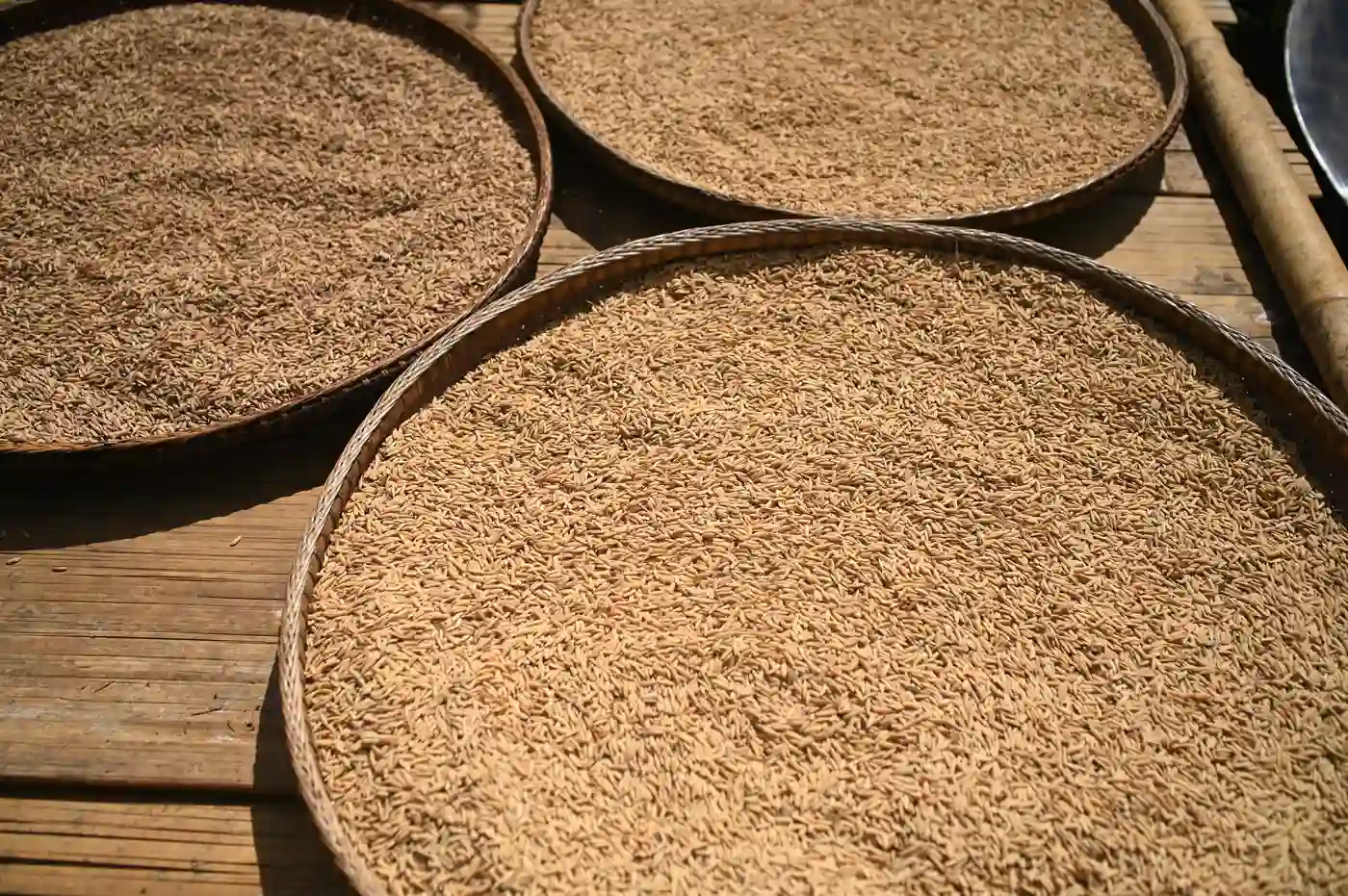
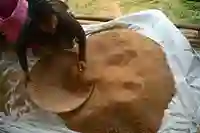
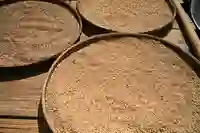
The grain is laid in the sun for two days to remove any trace of moisture, so that it can be stored for up to a year.
Those 43 sackfuls of rice heads made around 20 sacks of clean paddy.
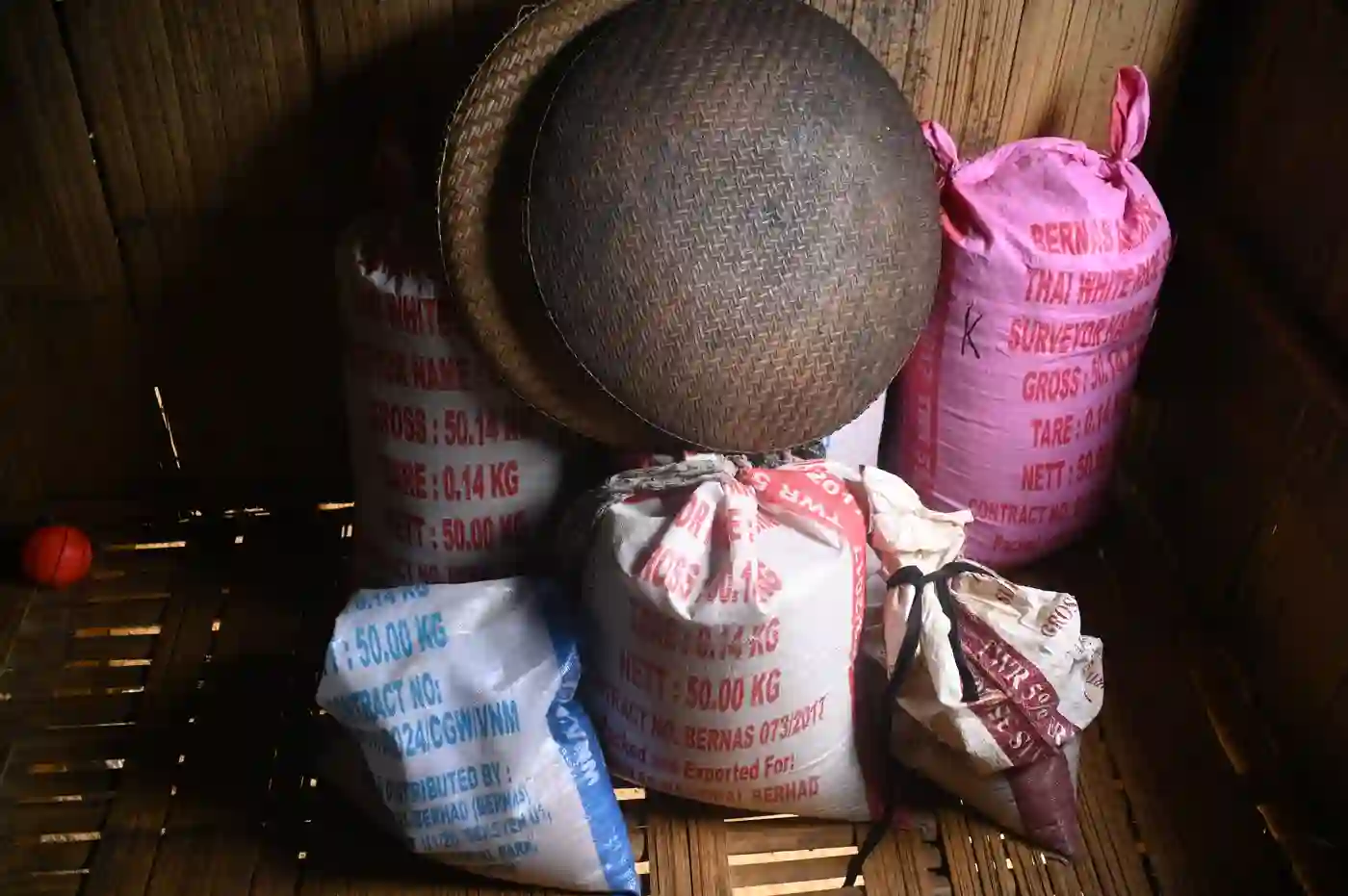
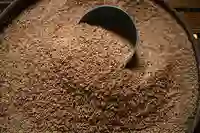
The rice is stored in sacks and measured amounts are sent to the mortar for pounding when food is needed. A sackful of each variety of paddy is reserved as seed for the next planting.
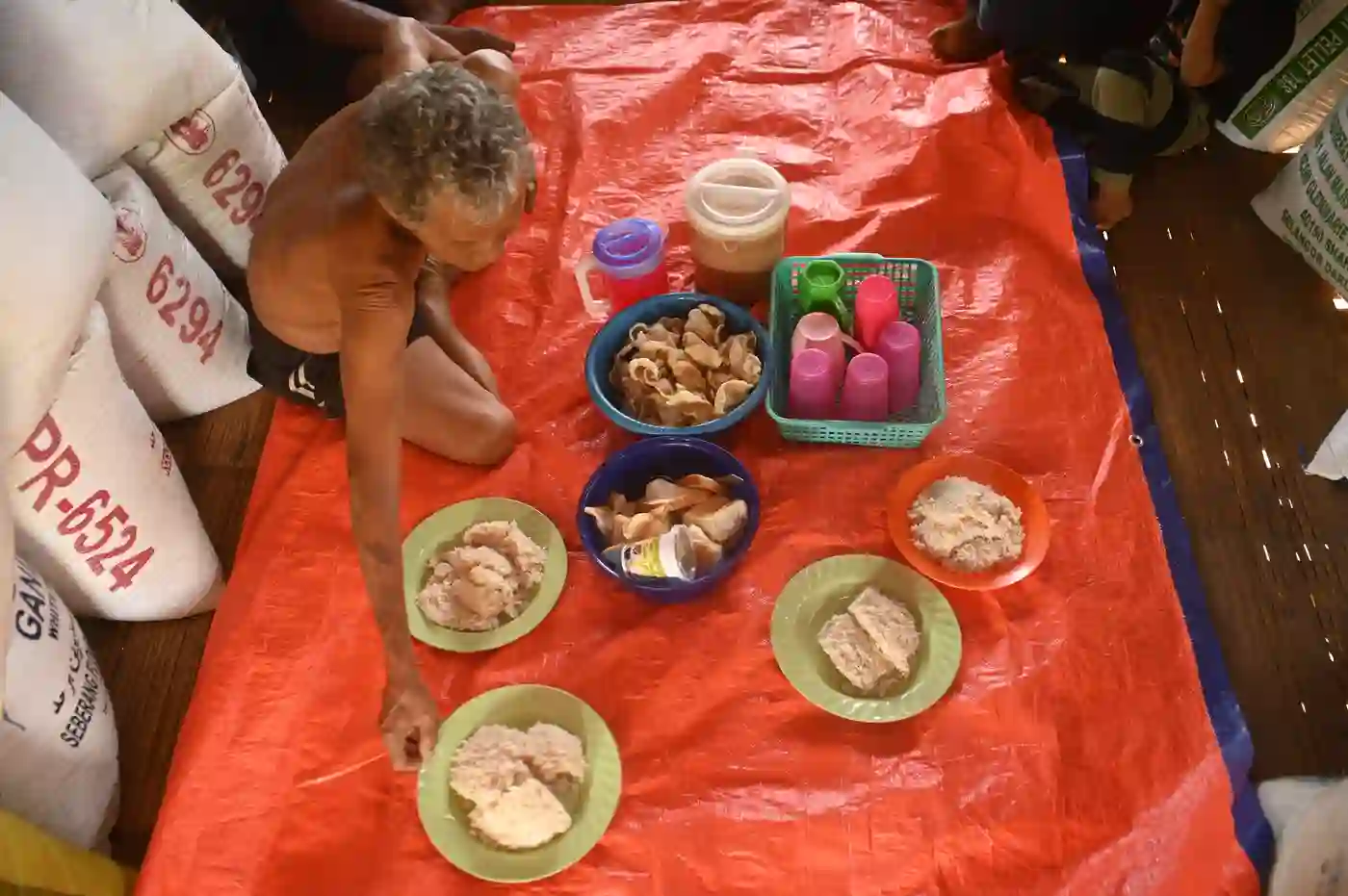
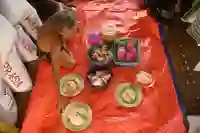
Once the harvest is over, another feast is held to celebrate all the hard work and the good fortune that the swidden gave.

Hide story Show story